
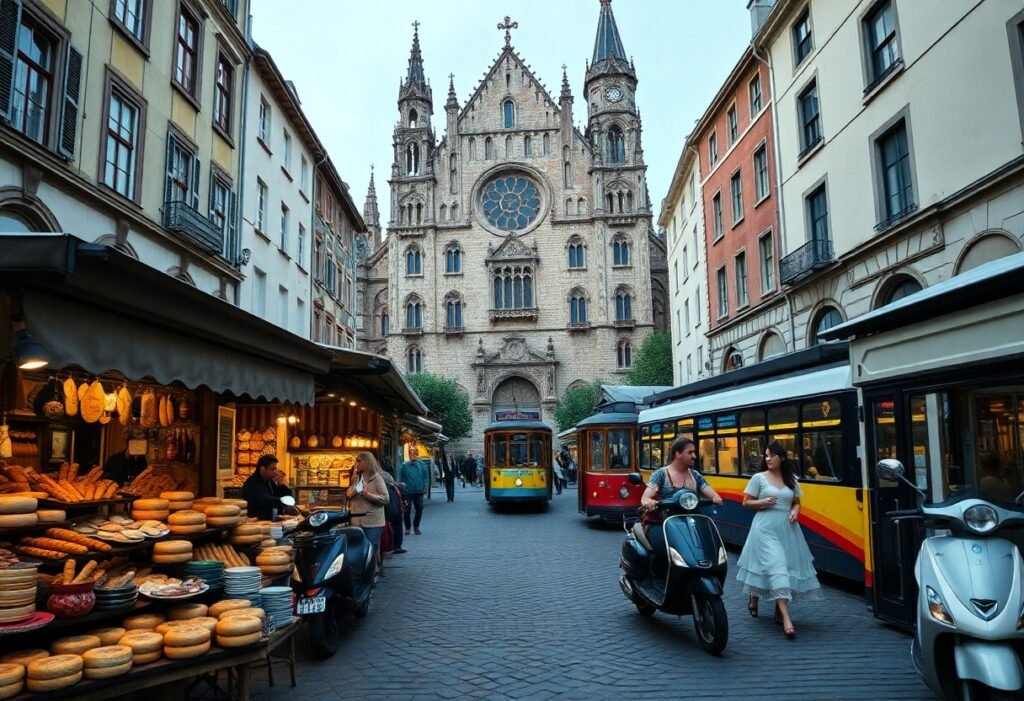
There’s a living tapestry of customs across Europe that shapes how you experience language, food, and public life; as you explore festivals, family rituals and regional arts – including resources like European Culture | History, Tradition & Facts – you’ll confront vibrant heritage, rising cultural tensions and enduring artistic legacies that define your modern identity.
Key Takeaways:
- Enduring regional customs-festivals, folk music, culinary rites and religious observances-anchor local identity while varying widely across Europe.
- Seasonal and communal rituals (markets, harvest festivals, carnivals) foster social cohesion and transmit cultural knowledge across generations.
- Traditions continually adapt through urbanization, migration and tourism, blending heritage with contemporary arts, cuisine and public life.
Historical Influences
Across centuries you see how imperial legacies and regional upheavals shaped customs: Roman law and infrastructure standardized civic rites (the Justinian code, 6th century), while Viking voyages (8th-11th centuries) spread maritime folkways. You also encounter local survivals – from Stonehenge rituals to harvest rites – and sometimes darker strands such as blood-drenched carnivals; explore quirky continuities in sources like 20 Bizarre European Traditions With Ancient Roots.
Ancient Civilizations
You trace classical echoes in language, law and festivity: Athens’ 5th-century BC drama festivals birthed modern theater traditions, Rome’s public games and roads organized civic life across five centuries, and Celtic and Norse rites endure in seasonal fairs. Stonehenge (c.3000-2000 BCE) shows ritual continuity. When you join a regional feast, you’re often participating in practices shaped over millennia.
The Role of Religion
You see religion structure calendars and communal identity: Catholic processions, Orthodox icons and Protestant reforms redirected worship after Martin Luther’s 1517 theses. Ottoman rule (14th-19th centuries) introduced Islamic customs into the Balkans, while the Thirty Years’ War (1618-1648) shows how religious conflict can transform borders and social life – a dangerous reminder of faith’s power.
You notice that religion both preserves and adapts traditions: Catholic brotherhoods in Seville keep processions dating to the 16th century, Orthodox monasteries safeguard Byzantine chant, and the Reformation reshaped civic rituals across northern Europe. Secularization since the mid-20th century reduced weekly attendance in many countries, yet faith-driven festivals still provide positive social cohesion and, at times, trigger contentious political debates.
Culinary Traditions
You move through Europe tasting histories: Spain’s tapas, Norway’s lutefisk and street-food hybrids that reveal migration patterns; you can dig into odd customs at Unusual European Traditions You May Have Never Heard …. With regional specialties protected and certain items (raw-milk cheeses, cured fish) presenting food-safety risks if mishandled, your culinary exploration balances delight and caution.
Regional Cuisines
You’ll notice stark contrasts: Basque pintxos served as social bites, Sicilian caponata blending Arab and Mediterranean influences, and Hungarian goulash as a communal stew. Across the 27 EU countries local terroir dictates staples-olive oil in the south, butter and fish in the north-and markets and festivals keep small producers visible, so when you taste a PDO ham or artisanal cheese you map geography by flavor.
Food as Cultural Identity
You often link nationhood to a dish: Poland’s pierogi, Spain’s paella, Portugal’s bacalhau with hundreds of regional recipes. Meals anchor family rituals, seasonal calendars and public celebrations; by eating these foods you participate in ongoing stories about who belongs and what counts as tradition.
France’s appellation systems and Italy’s inclusion of the Mediterranean diet (UNESCO, 2013) illustrate institutional protection of food heritage. Migration reshapes identity too-döner kebab became a German street-food staple-so when you follow labels, festivals and street trends you track how culinary identity adapts and who negotiates authenticity.
Festivals and Celebrations
You move through Europe’s calendar via markets, carnivals and public rites; Munich’s Oktoberfest draws about 6 million visitors annually, while tiny village patron saint days still shape daily life in rural Italy and Spain. These events weave history into your social year and keep local crafts, music and foods in active circulation.
Traditional Holidays
You observe fixed dates like December 25 and January 6 with nativity scenes, long family meals and regional sweets; Midsummer around June 21 in Scandinavia brings bonfires and maypoles, and All Saints’ Day on November 1 prompts cemetery visits. These rituals sustain family bonds and regional identity, passing customs across generations.
Modern Celebratory Practices
You now experience large-scale music festivals and street spectacles alongside centuries-old rites; La Tomatina caps attendance near 20,000, while Pamplona’s running of the bulls involves roughly 1,000 participants and remains dangerous. Simultaneously, branded experiences, livestreams and pop-up micro-festivals redefine how you take part.
You see operational shifts: major events like Glastonbury (≈200,000 attendees) and Tomorrowland (≈400,000 across weekends) prioritize advanced ticketing, shuttle logistics and on-site medical teams to manage crowds. Organizers implement sustainability targets-waste sorting, local sourcing and reduced single-use plastics-and adopt hybrid models so you can join via livestreams or in person. Local authorities increasingly require safety plans and noise limits, which affects capacity and vendor practices, while sponsorship and dynamic pricing change who can attend and how festivals fund cultural programming, producing both positive economic effects and ongoing risk debates.
Language and Literature
You navigate a continent where speech and text shape identity: the EU recognizes 24 official languages, while hundreds of regional and minority tongues survive in towns and rural pockets. You hear Basque in the Basque Country, Sámi varieties across the Arctic, and Romani in many urban communities. Many languages are endangered, yet you also see energetic revival programs, bilingual schools and digital archives keeping oral and written traditions alive.
Language Diversity
You’ll notice language families collide: Romance, Germanic, Slavic and Uralic all meet in different regions, and isolates like Basque persist. You can point to roughly a dozen Sámi varieties across Norway, Sweden and Finland, and to regional policies-Catalonia’s bilingual education or Wales’ Welsh-medium schools-that protect minority speech. UNESCO lists dozens of European languages as endangered, motivating community-driven revival projects such as Cornish and Manx.
Iconic Literary Works
You encounter canonical texts that shaped national identities: Cervantes’ Don Quixote (1605/1615) often called the first modern novel, Dante’s Divine Comedy (14th century) which helped standardize Italian, Shakespeare’s roughly 37 plays and 154 sonnets that expanded English, Goethe’s Faust, and Tolstoy’s War and Peace (1869). These works remain central in school curricula and public festivals.
You can trace concrete impacts: the First Folio (1623) preserved many of Shakespeare’s plays, Dante’s vernacular choice shaped modern Italian, and Cervantes influenced Spanish prose conventions. You’ll find museums, annual readings and stage adaptations across Europe that keep these texts active, while translations and critical editions continue to renew their reach for contemporary readers and scholars.
Artistic Expressions
Across galleries, stages and public spaces you encounter a lineage of innovation: the Louvre draws about 9.6 million visitors a year pre-pandemic, the Venice Biennale (founded 1895) sets trends, and works by Picasso, Rembrandt and Caravaggio anchor national narratives. You can trace movements-Impressionism, Baroque, Cubism-through case studies like the Rijksmuseum’s restoration of Rembrandt’s The Night Watch or the 1911 Mona Lisa theft, events that reshaped security and provenance practices.
Visual Arts
At the Van Gogh Museum in Amsterdam you view around 200 paintings and hundreds of drawings; in Madrid the Prado centers Goya and Velázquez’s Las Meninas, while the Rijksmuseum presents Rembrandt’s The Night Watch. You will confront debates over provenance and restitution – postwar WWII looting and ongoing restitution cases have returned major works and forced cataloging reforms across collections, affecting exhibitions and international loans.
Performing Arts
Onstage you find institutions like La Scala (opened 1778, ~2,000 seats) and the Vienna State Opera alongside open-access platforms such as the Edinburgh Festival Fringe with over 50,000 performances; you can attend a Salzburg Festival opera or catch the Vienna Philharmonic’s New Year’s Concert broadcast to over 90 countries. Programming spans historic repertory, contemporary premieres and touring ensembles that animate city centers throughout the year.
Programming survives through a mix of box-office sales, subscriptions and public support, and you’ll notice how digital relays and free streams since 2020 expanded reach to new audiences. Major companies commission contemporary works alongside canon pieces to attract younger patrons, using affordable tickets, community outreach and youth programs to rebuild attendance. Yet funding cuts and labor disputes have canceled seasons in some countries, forcing repertory shifts and precarious employment for performers.
Clothing and Fashion
You witness how garments encode history and status across Europe: from Milano’s precision tailoring and Parisian haute couture to regional streetwear and festival dress. Folk pieces like the Scottish kilt or Romanian blouse still signal lineage, while city style borrows those motifs. Museums, craft schools and revival festivals keep skills alive, and you can often trace a garment’s origin by cut, embroidery or fabric-making clothing one of the most visible markers of cultural continuity and change.
Traditional Attire
You encounter traditional outfits at weddings, national holidays and harvest fairs: the Norwegian bunad (often costing several thousand euros), Bavarian lederhosen and dirndl, Scottish kilts, and embroidered Balkan dresses. These pieces preserve regional patterns, local dyes and techniques such as hand-embroidery or weaving, and you’ll notice that communities actively teach these skills in local guilds and museum workshops to maintain textile heritage.
Contemporary Influences
You see contemporary European fashion mix heritage with mass-market and streetwear: Paris and Milan host major fashion weeks twice yearly, while brands like Zara and H&M scaled European design globally. At the same time, fast fashion’s waste and pollution clash with a rising sustainable scene-upcycling designers and resale markets-so you often find vintage, luxury and eco labels layered together on city streets.
You can study case studies such as Inditex’s rapid turnaround model, which refreshes collections within weeks, contrasted with designers like Marine Serre and Stella McCartney who prioritize upcycling and alternative fibers. EU policy, including the 2020 Circular Economy Action Plan, now pushes producers toward traceability and durability, and you’ll notice more brands adopting repair services, transparent supply chains and positive circular initiatives to counter textile waste.
To wrap up
Upon reflecting, you observe that Europe’s living traditions-seasonal festivals, musical and culinary practices, linguistic diversity, artisanal crafts, and civic rituals-continue to shape your identity and social norms; they guide how you celebrate, debate values, and pass knowledge between generations, ensuring cultural resilience even as migration, technology, and politics transform daily life.
