
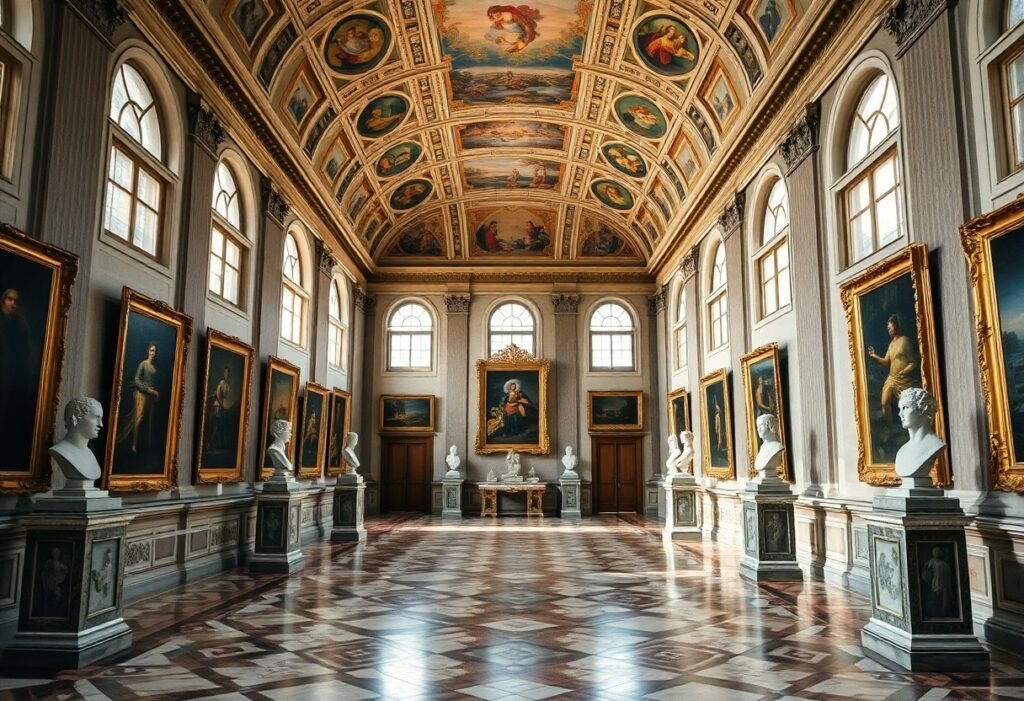
Over centuries, you can trace Europe’s artistic evolution from classical masterpieces to avant‑garde movements, and your journey will reveal masterpieces, sites threatened by conflict and decay, and vibrant museums where conservation efforts preserve fragile works; engaging with regional techniques and living traditions gives you authoritative insight into cultural resilience and the rewards of firsthand study.
Key Takeaways:
- European art spans millennia and styles-from ancient and medieval to Renaissance, Baroque, and modern-showcasing regional techniques and materials.
- Political power, religion, patronage, and cross-cultural exchange shaped movements and iconography, tying artworks to historical and social contexts.
- Museums, restoration programs, and curated itineraries make it possible to experience both iconic masterpieces and regional artistic traditions.
The Influence of the Renaissance
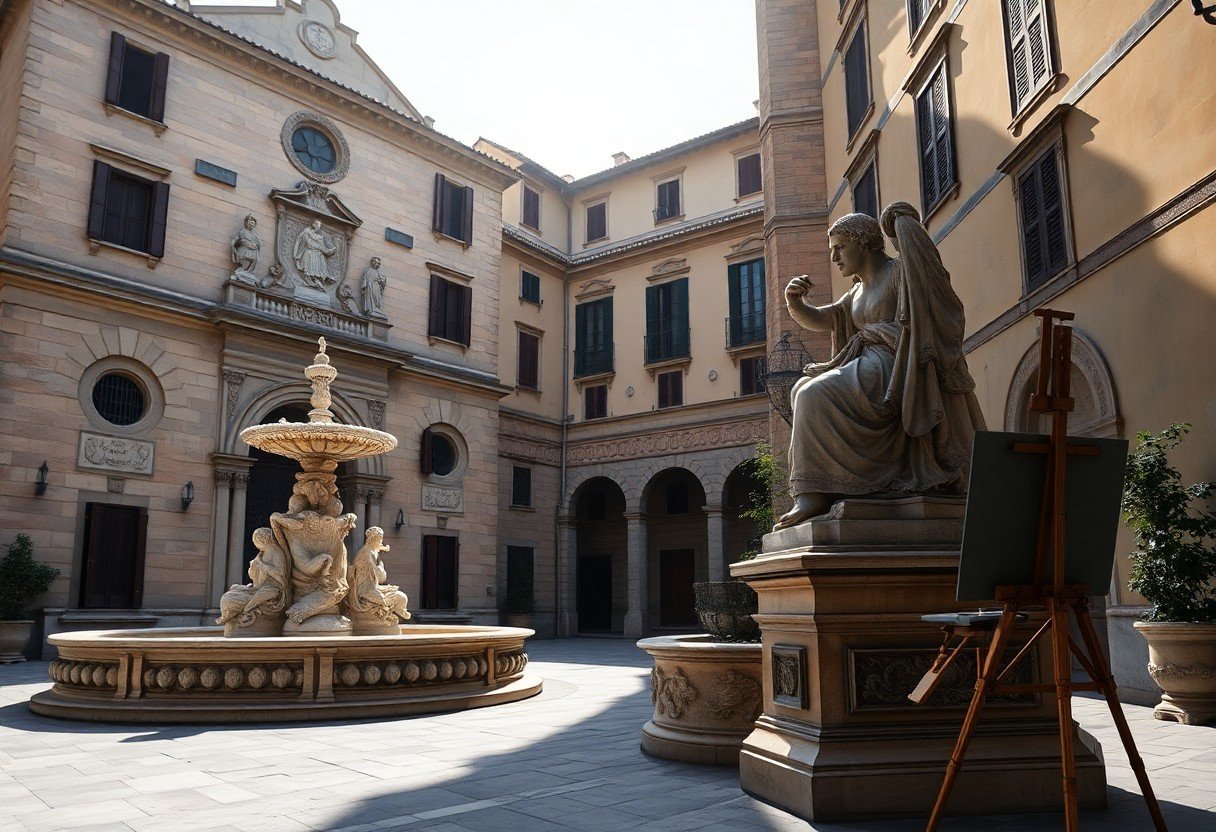
From the 14th to the 16th century in Italy you see a seismic shift: humanist patronage and rediscovery of classical proportion transformed composition, while new techniques spread rapidly across Europe via prints and workshops. You can point to Brunelleschi’s dome (1420-1436) and the High Renaissance (c.1500-1520) as moments when art reshaped civic identity, education, and religious imagery-sometimes provoking church censorship and iconoclasm.
Key Figures and Movements
You encounter innovators like Leonardo da Vinci (Mona Lisa, c.1503-1506), Michelangelo (Sistine Chapel, 1508-1512), and Raphael alongside Northern masters such as Jan van Eyck and Albrecht Dürer. Early Renaissance advances in the 1400s gave way to the High Renaissance around 1500; you can trace regional styles through Florentine, Venetian, and Flemish schools and the role of patrons like the Medici family.
Artistic Innovations
You see technical leaps-Brunelleschi’s formulation of linear perspective in the 1420s, the Northern refinement of oil painting by van Eyck in the 1430s, and Leonardo’s experiments with sfumato and anatomy that informed lifelike figures. Printmaking multiplied images: Dürer’s 1514 engravings circulated ideas fast, while architectural feats altered skylines and civic pride.
You can examine case studies: Michelangelo painted the Sistine ceiling between 1508 and 1512, covering roughly 500 square meters in fresco and redefining monumental figuration; Leonardo’s anatomical sketches-made from dozens of dissections-made proportion studies that artists and surgeons referenced for centuries. Van Eyck’s oil glazes produced deeper color and detail, while Dürer’s woodcuts and engravings (e.g., 1498 and 1514 plates) spread styles across Europe.
The Baroque Era: Drama and Emotion
By the 17th century (c.1600-1750) Baroque art intensified sensory impact: you encounter bold chiaroscuro, swirling motion, and compositions meant to elicit visceral response, driven by the Catholic Counter‑Reformation and absolutist courts across Italy, Spain, Flanders, France and the Dutch Republic; museums and churches used art as spectacle, so you often face works created to overwhelm viewers with scale, light, and theatricality.
Major Artists and Their Works
You can trace Baroque innovation through artists like Caravaggio-The Calling of Saint Matthew (1599-1600) with its stark chiaroscuro-Bernini’s Ecstasy of Saint Teresa (1647-1652) sculpted for Santa Maria della Vittoria, Velázquez’s Las Meninas (1656) reshaping portraiture, Rembrandt’s The Night Watch (1642) redefining group composition, and Artemisia Gentileschi’s Judith Slaying Holofernes (c.1614-20) challenging conventions with violent realism.
Architectural Masterpieces
You’ll notice Baroque architecture amplifies theatricality: St. Peter’s Basilica (completed 1626) crowned by Michelangelo’s dome (≈136.6 m high), Bernini’s sweeping colonnade (1656-1667) framing the piazza, Borromini’s San Carlo alle Quattro Fontane (1638-1646) with undulating facades, and Versailles (begun 1661) where Le Vau, Le Nôtre and Mansart staged royal power in vast gardens and the 73‑m Hall of Mirrors.
Examining details, you’ll find Bernini used spatial choreography-columns and terraces-to guide sightlines and ritual movement, while Borromini employed complex geometry and oval plans to create intimate drama; hidden windows and directed light illuminate focal sculptures, and architects manipulated scale so buildings functioned as theatrical sets reinforcing political and religious narratives.
Impressionism and Modern Movements
You trace how Impressionism (Monet’s Impression, Sunrise, 1872) broke studio convention with plein‑air light study, leading into Fauvism, Cubism and Surrealism; the 1874 first Impressionist exhibition challenged Parisian salons. You can visit many surviving sites on the cultural circuit-see European Best Destinations Announces Top 10 Cultural …-and observe how public exhibitions redefined patronage across Europe.
Breakthrough Artists
You’ll encounter figures whose experiments reshaped form: Claude Monet (plein‑air pioneer), Pablo Picasso (Les Demoiselles d’Avignon, 1907) and Paul Cézanne (bridging Impressionism and Cubism). You can study Van Gogh’s prodigious output-about 2,100 artworks, 860 oil paintings-and Matisse’s color revolutions; their innovations shifted technique, market valuations and museum representation across Europe.
Shifts in Artistic Expression
Starting with the 1905 Salon d’Automne showcase of the Fauves, you see color become an assertive language; soon after Les Demoiselles d’Avignon (1907) and the 1908-1914 Cubist experiments fragmented perspective. You should note that World War I (1914-1918) disrupted artist networks, accelerating avant‑garde decentralization toward cities like Berlin and Barcelona.
You can trace material and conceptual turns: Picasso and Braque’s collage and papier collé from 1912 altered objecthood, Dada’s 1916 Cabaret Voltaire rejected authorship, and André Breton’s Surrealist Manifesto (1924) codified dream logic; museums such as the Centre Pompidou and Tate Modern now stage retrospectives that map these decisive shifts across dozens of works.
The Role of Museums in Preserving Heritage
You depend on museums to act as living archives: they conserve and restore paintings, sculptures and textiles using scientific labs and climate‑controlled storage, while also educating the public. Institutions coordinate emergency responses to threats like war, looting and climate change, and you can find curated routes and trips via Explore the Art & Culture of Europe wih JayWay Travel to see how collections are presented across regions.
Notable Museums Across Europe
You can visit the Louvre (≈9.6 million visitors in 2019) to see the Mona Lisa, the British Museum (≈6 million) for the Rosetta Stone, the Prado (≈3.2 million) for Velázquez and Goya, the Uffizi for Renaissance masters, and the Rijksmuseum for Rembrandt and Vermeer; many regional museums like the Museo Nacional Thyssen-Bornemisza and the Kunsthistorisches Museum host specialized collections that reveal local techniques and patronage.
Exhibitions and Collections
You notice blockbuster exhibitions often rotate star works from global loans, boosting attendance and research; temporary shows can draw hundreds of thousands of visitors and fund conservation projects. Digital catalogs, 3D imaging and virtual tours now extend access beyond physical walls, while museums balance display needs with preservation through strict light, humidity and handling protocols.
You should also be aware that exhibitions drive intensive provenance research and ethical debates: museums increasingly publish ownership histories and pursue repatriation cases such as the Benin Bronzes, while combating illicit trade. Conservation departments document treatments in detail, employ X‑ray and spectroscopy, and coordinate international loans that strengthen scholarship and public engagement.
Regional Artistic Traditions
Across Europe you notice how climate, patronage, and materials shape styles: in the north artists favored oil glazing and fine detail for candlelit interiors, while the south developed fresco and marble techniques for sunlit plazas and churches; for example, 15th‑century Flemish workshops perfected oil layers, whereas Florence in the 1400s centralized fresco innovation under patrons like the Medici, and Byzantine mosaics persisted in the Balkans, even surviving periods of war damage and looting.
Northern vs. Southern European Art
You can trace clear contrasts: Northern painters such as Jan van Eyck (c.1434) and 17th‑century Dutch masters emphasized microscopic texture, realism, and domestic scenes, while Southern masters-think Michelangelo’s Sistine Chapel (1508-1512) and Caravaggio’s tenebrism-prioritized monumental composition and dramatic light; materials mattered, too, with oil on panel dominating the North and wet‑plaster frescoes and marble sculpture anchoring the South.
Unique Contributions from Each Country
You’ll find national specialties: Italy gave you the Renaissance workshop system and anatomical study, the Netherlands produced the Dutch Golden Age of genre and still life, Spain moved toward psychological realism with Velázquez and Goya, France launched Impressionism in the 1870s, and Germany propelled Expressionism in the 20th century-each country offering techniques and institutions that reshaped European art.
For concrete reference, visit the collections that embody these contributions: the Louvre (home to the Mona Lisa), the Prado (with Velázquez’s Las Meninas), and the Rijksmuseum (showcasing Rembrandt and Vermeer); you’ll see how museum curation, national academies, and state patronage preserved stylistic lineages and drove cross‑border influence across centuries.
The Impact of Historical Events on Art
Historical upheavals have reshaped collections and practice across Europe: during WWII an estimated 600,000 artworks were looted or displaced, forcing museums to rebuild and repatriate pieces; when you walk through the Rijksmuseum or the Mauritshuis you encounter gaps and restorations that tell that story. For further museum examples and recovery efforts, see Explore the Rich Cultural, Artistic, and Historical Heritage …
Wars and Political Changes
You witness direct artistic consequences from conflicts: Picasso’s Guernica (1937) responded to the Spanish Civil War (1936-1939), while Goya’s late works depicted Napoleonic violence. Bombings-Rotterdam in 1940 and Dresden in 1945-destroyed archives and architecture, and Nazi looting removed masterpieces from public view, altering collections for decades and prompting large restitution projects after 1945.
Artistic Responses to Social Issues
Artists repeatedly turn social crises into new forms: after WWI the Dada movement embraced absurdity to protest mechanized slaughter, and the May 1968 protests in Paris spawned prolific poster art and collective practices. You’ll see contemporary street art and feminist works confronting inequality and migration across European capitals.
Digging deeper, you find case studies: Anselm Kiefer confronts German memory through monumental canvases, while British YBAs-Damien Hirst and Tracey Emin-provoked debates during the 1997 Sensation exhibition; Emin’s My Bed (1998) and Hirst’s The Physical Impossibility of Death in the Mind of Someone Living (1991) forced you to reassess value, trauma, and commodification in late‑20th‑century Britain, and the fall of the Berlin Wall in 1989 unleashed new cross‑border artistic exchanges.
Conclusion
Taking this into account, you are equipped to navigate Europe’s artistic heritage with a clear understanding of its evolving styles, regional schools, and historical contexts; your guided visits and focused study will deepen your appreciation and allow you to trace how art shaped societies across centuries.
