
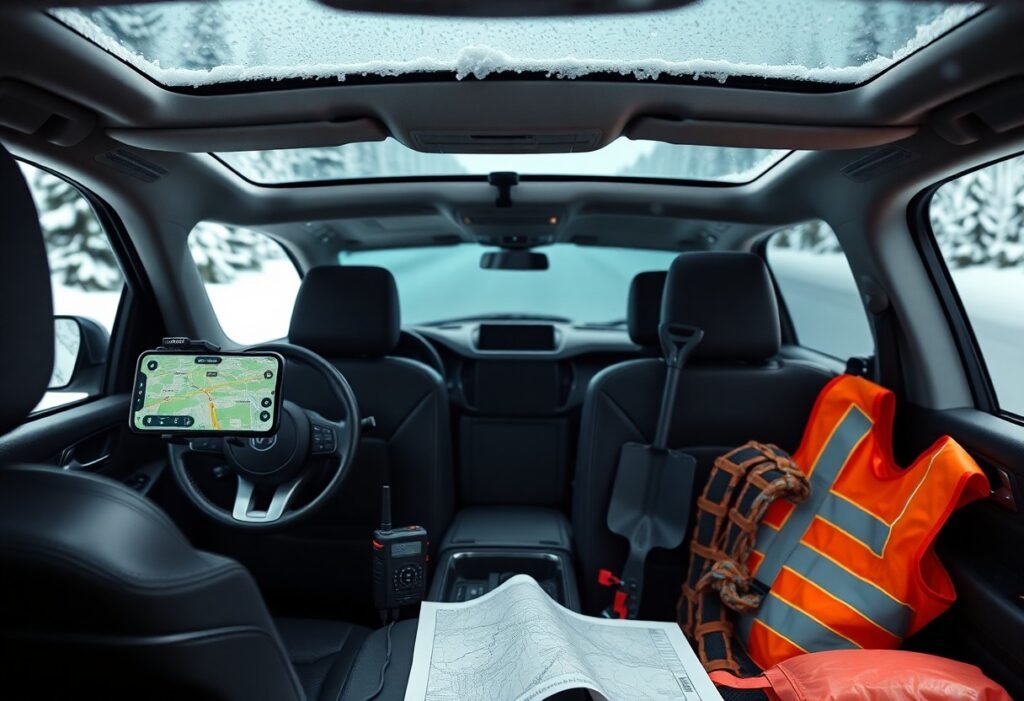
There’s a checklist you follow: check tires, pack a winter emergency kit, carry extra blankets for warmth, and watch for black ice; slow before curves and call for help if stranded.
Key Takeaways:
- Prepare the vehicle: install winter tires, test battery and heater, top off antifreeze and windshield fluid, check lights, and pack an emergency kit (blanket, shovel, jumper cables, high‑calorie snacks).
- Pack for comfort: bring warm layers, wool socks, insulated blanket, thermos with hot drinks, a portable charger, and a small cushion or lumbar support for long stretches.
- Drive with winter habits: reduce speed, increase following distance, use gentle steering and braking, choose major cleared routes when possible, and carry traction aids (sand, traction mats, chains) while keeping the fuel tank at least half full.
Emergency Survival and Recovery Gear
Pack a compact kit so you can handle winter stops: portable jump starter, shovel, tow straps, traction mats, and a first-aid pack. Check our 9 Road Trip Hacks for Ultimate Comfort for more tips to keep you safe and comfortable.
Essential Roadside Repair Tools
Stock basic tools so you can fix common winter faults: tire repair kit, lug wrench, jumper cables or a portable jump starter, folding shovel, and a bright LED flashlight. Keep these accessible so you can act quickly when you face freezing conditions.
Sustenance and Warmth Supplies
Store high-energy snacks, insulated water bottles, thermal blankets, chemical hand warmers, and a small stove or fuel canister so you can stay warm and fed if stranded.
Keep a mix of calorie-dense, nonperishable foods (nuts, energy bars, dried fruit), boiled-water-safe containers, and a portable stove with spare fuel so you can prepare hot drinks. Add extra insulated blankets and a high-output flashlight. Store water in multiple sealed containers; freezing can rupture bottles, so rotate supplies and melt snow only when necessary to avoid contamination.
Interior Comfort and Climate Control Hacks
Your cabin comfort improves when you set climate control to a steady, moderate temperature, use seat heaters sparingly, layer clothing, and keep a blanket and ice scraper within reach to avoid risky stops for shivering or frozen glass.
Managing Cabin Insulation and Air Quality
Check door and window seals, add weatherstripping, and use recirculated air sparingly to reduce condensation; run fresh air periodically to lower carbon monoxide risk, and never warm the vehicle inside a closed garage.
Ergonomic Accessories for Cold-Weather Driving
Invest in a heated steering wheel cover, lumbar support, and insulated seat pads to keep you warm and alert; secure loose items that could become projectiles during abrupt stops.
Pair heated accessories with battery and alternator checks; avoid leaving plug-in warmers unattended, choose low-profile supports that won’t impede airbag deployment, and confirm fit so you remain comfortable without compromising safety.
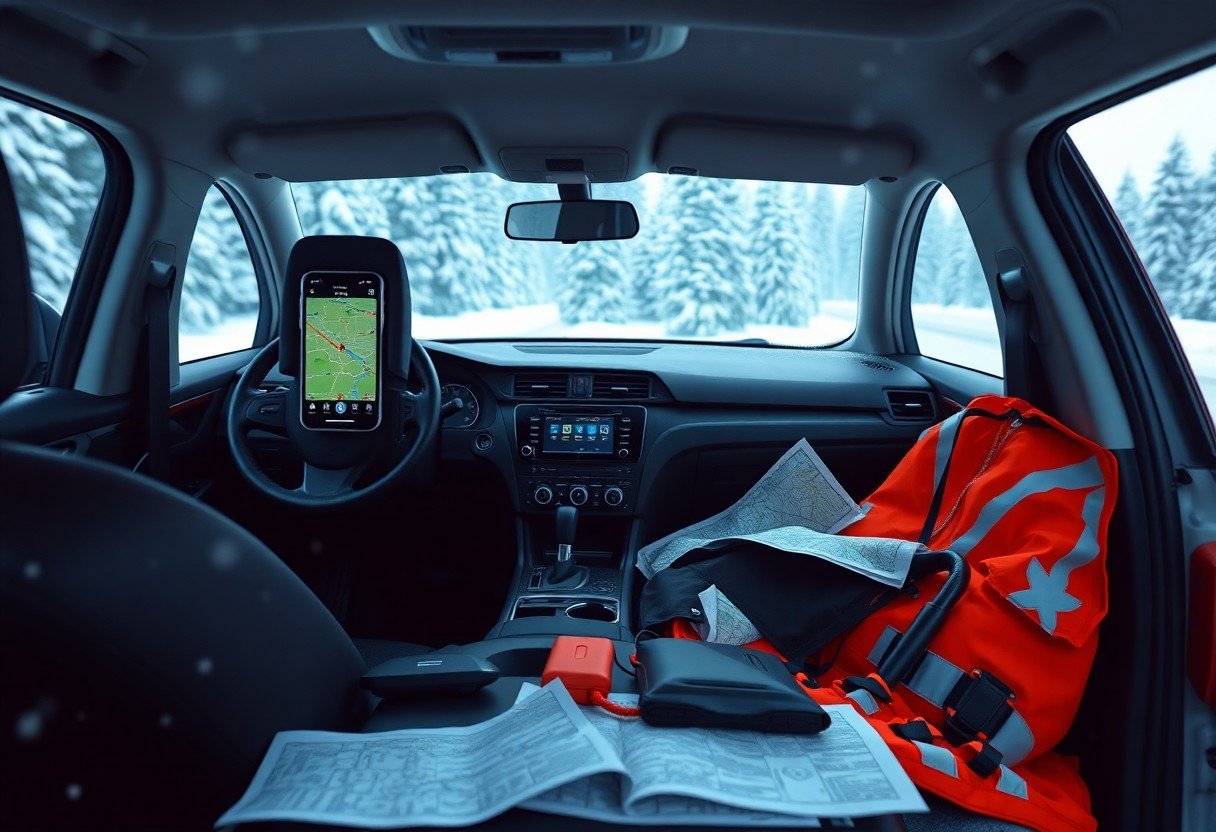
Navigation and Communication Reliability
Keep multiple route sources: downloaded offline maps, a paper map, and a satellite messenger; check the Reddit thread Advice/Tips/Tricks: Winter Ski Roadtrip of the Western US & … for field-tested tips. You should mark low-coverage stretches; poor reception can delay rescues.
Offline Mapping and GPS Redundancy
Offline maps from multiple apps plus paper charts keep you moving when service drops; download region tiles and save routes to your device before departure. Use a handheld GPS as backup and test accuracy on known points.
Maintaining Device Power and Signal
Charge several power banks, a 12V car charger, and keep cables organized; cold drains batteries fast, so store spares warm inside your jacket and top up devices during stops.
Protect batteries by keeping power banks and spare phones inside your coat or an insulated pouch, since cold can cut capacity quickly. You should rotate devices so one stays warm, enable low-power modes, and close background apps. Consider a high-capacity 12V inverter and a compact solar panel for multi-day trips. If you run the engine to charge, ensure exhaust is clear and windows are cracked; never sleep in a running car due to carbon monoxide risk.
Summing up
Now you should pack an emergency kit, check tires and battery, plan shorter driving segments, use traction aids, keep warm clothing and supplies accessible, and maintain steady speeds to maximize comfort and safety on winter road trips.
