
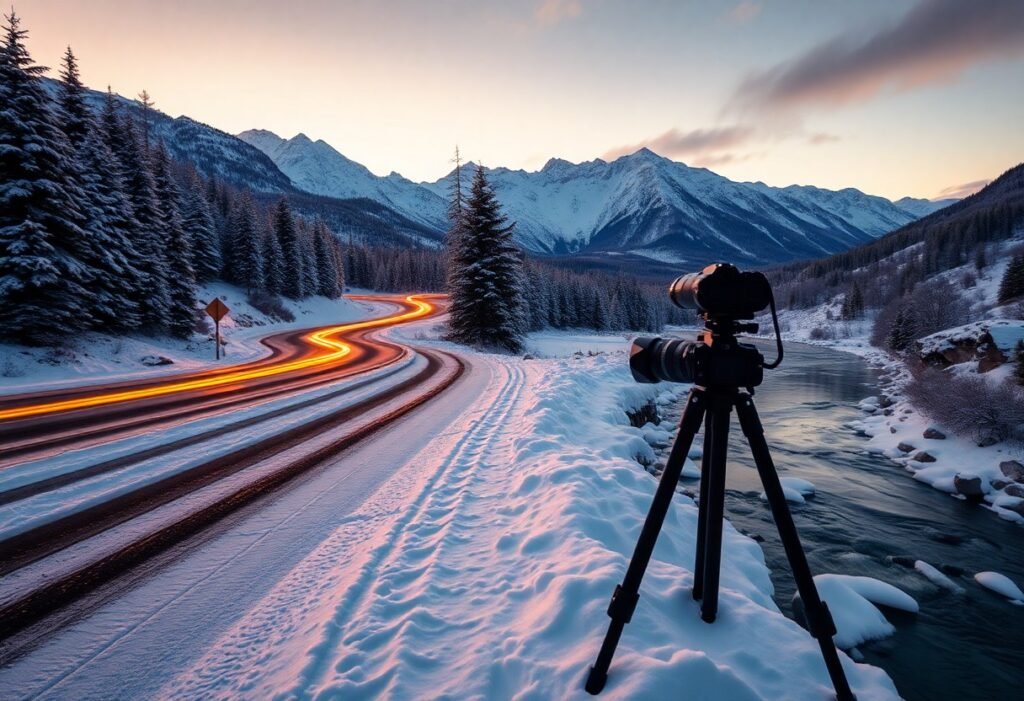
Key Takeaways:
- Keep spare batteries warm and carry a sturdy tripod; cold drains batteries quickly, long exposures need stable support, and pack a lens cloth plus weather protection.
- Expose for highlights and use the histogram to avoid blown snow; dial +2/3 to +1.5 EV when meters underexpose and set a custom white balance or 6000-7000K to keep snow neutral.
- Shoot during golden hour or blue hour and after fresh snow; include foreground interest and leading lines, use low angles, and add a person or vehicle for scale.
Essential Gear and Equipment Factors
Pack weatherproof gear, layered clothing, and reliable equipment to handle snow, wind, and glare. The checklist should include spare batteries, rain covers, and a sturdy tripod.
- Spare batteries
- Weather covers for body and lenses
- Sturdy tripod
- Microfiber cloths and silica packs
- Insulated carrying case
Protecting camera bodies and lenses from moisture
Keep your camera bodies and lenses dry with weather-sealed covers, silica packs, and quick-drying microfiber; avoid rapid temperature shifts that cause condensation.
Managing battery life in extreme cold conditions
Rotate batteries frequently and store spares in an inner pocket so you keep them warm; extreme cold reduces battery life and can trigger sudden shutdowns.
Insulate spare batteries in warm pockets or insulated pouches, swap them often, minimize LCD and wireless use, and carry a fully charged, low-temperature-rated power bank; using hand warmers or keeping batteries close to your body can prevent sudden shutdowns and extend shooting time in frigid conditions.
Planning the Route for Maximum Visual Impact
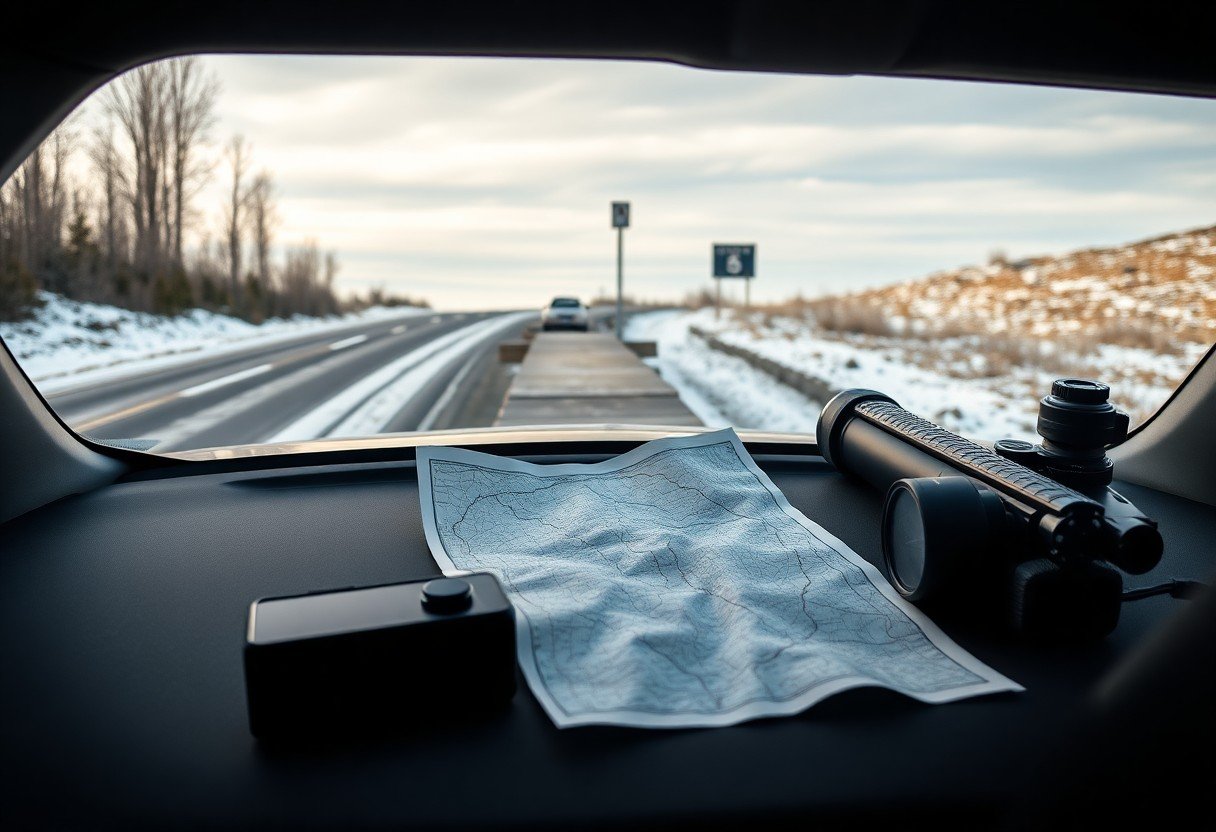
You should map routes that hit commanding viewpoints, schedule stops for golden hours, and follow local guidance like Winter Photography Tips – Create Stunning Images in the …, always prioritizing safe, visible pull-offs over risky spots.
Identifying scenic viewpoints and safe roadside pull-offs
Scout potential viewpoints before you arrive, marking wide, plowed pull-offs and legal stopping zones so you avoid icy shoulders and unsafe turns while composing shots.
Monitoring weather patterns and light availability
Check forecasts for cloud cover, wind, and temperature so you can chase clear light, target mornings and evenings for soft, directional illumination, and steer clear of storms that cause dangerous icy roads.
Use reliable apps and local DOT alerts to track hourly radar and road conditions; cross-check forecasts with road reports to reroute around closures, monitor sun angle for exact golden-hour timing, and pack extra batteries and insulated cases because cold drains power and sudden weather can cut visibility and access.
Composition Tips for Dramatic Winter Landscapes
Compose shots using the rule of thirds, bold contrast, and negative space to emphasize winter stillness. Any time you spot graphic shapes-bare trees, ridgelines, or roadside fences-use them to anchor the frame and heighten drama.
- Use strong leading lines
- Add textured foreground interest
- Balance with striking negative space
Incorporating leading lines and foreground interest
Place strong leading lines-tracks, fences, shadows-to pull the eye inward and pair them with a textured foreground for immediate depth and impact.
Utilizing the scale of vast snow-covered mountain ranges
Scale of vast snow-covered mountain ranges lets you convey awe; include a tiny person or vehicle to show scale and hint at danger from exposure.
Use wide-angle lenses to exaggerate foreground-to-peak distance or telephoto glass to compress layers; bracket exposures to preserve highlights and watch for glare that can mask hazards.
Conclusion
You can capture stunning winter road-trip photos by planning golden-hour stops, using exposure compensation for snow, stabilizing your camera, composing with contrasting elements, and protecting gear from cold; practice shooting raw and bracketing to ensure crisp, well-exposed images in challenging light.
