
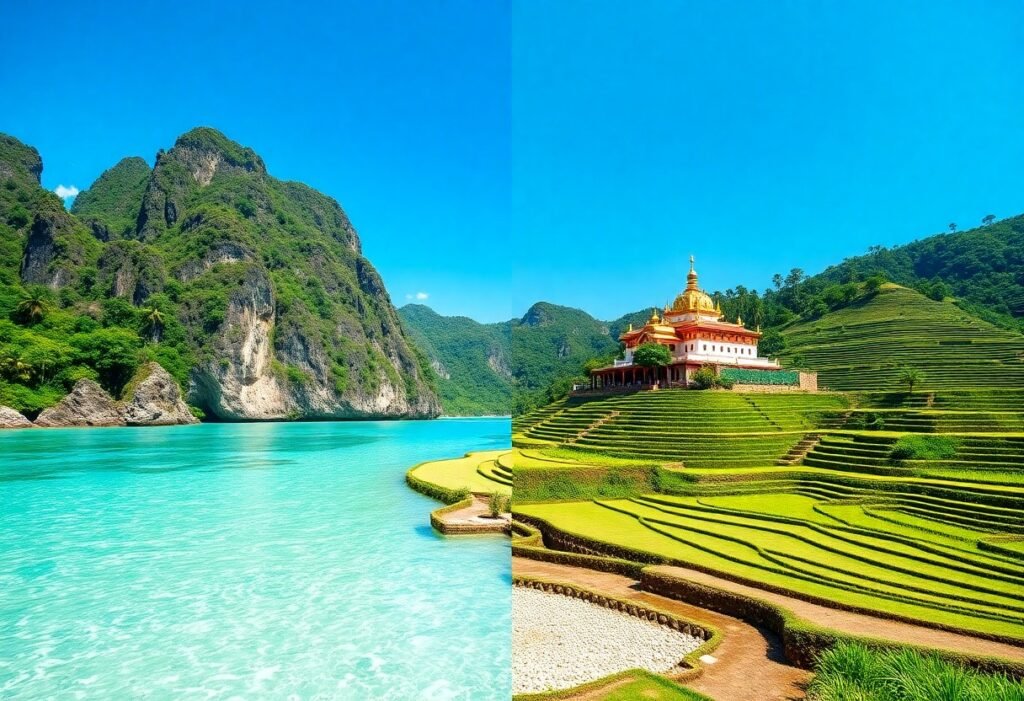
There’s a predictable rhythm to Southeast Asia’s climate that helps you plan: aim for the dry season (November-February) for sunny beaches, clear skies, and comfortable trekking; avoid the monsoon period (May-October) when heavy rains, flooding and dangerous storms disrupt travel; consider the shoulder months for fewer crowds and lower prices, and check regional variations so you can tailor your trip for the best weather in each country.
Key Takeaways:
- Nov-Feb is the best overall window for cool, dry weather across most of mainland Southeast Asia (Thailand, Cambodia, Laos, Myanmar, Vietnam) and many popular islands – ideal for trekking, sightseeing, and beach hopping.
- Island seasons vary: Bali/most of Indonesia is dry Apr-Oct; the Philippines and parts of eastern Indonesia are best Nov-Apr; Malaysia’s east coast (Perhentian/Redang) is Apr-Oct, while Peninsular west coast and Singapore are wetter year‑round but tend to be drier Feb-Apr.
- Shoulder months (Oct and Mar-Apr) offer fewer crowds and lower prices with generally good weather; check local monsoon windows for your specific destination before booking.
Overview of Southeast Asia’s Climate
Across the region you encounter hot, humid lowlands and cooler highlands: coastal temperatures typically sit between 25-32°C, while mountain towns drop into the teens in winter. Rainfall is highly variable-some islands and highland catchments receive >2,000 mm annually-so plan around seasonal shifts; Nov-Feb is the most reliable dry, cool window for much of the mainland. For detailed, country-by-country timing consult Best time to visit Southeast Asia – Responsible Travel.
Tropical Monsoon Climate
The region is dominated by a tropical monsoon system: the southwest monsoon (roughly May-Oct) brings the main wet season with frequent heavy downpours and monthly totals often exceeding 200-400 mm, while the northeast monsoon (Nov-Mar) delivers drier air to large parts of the mainland but increases rainfall in parts of the Philippines and eastern Indonesia. You should expect short, intense storms, localized flooding and road closures during peak months.
Regional Weather Patterns
Mainland areas (Thailand, Cambodia, Laos, Myanmar, Vietnam) have a pronounced dry season in Nov-Feb, whereas maritime countries (Indonesia, Malaysia, Singapore) experience more evenly distributed rainfall with island-specific dry windows; the Philippines faces a typhoon season from about Jun-Dec, peaking Aug-Oct. Your itinerary should align with these contrasts: beach plans differ from trekking and city visits.
For practical planning, pick mainland beach and trekking trips between November and February-Chiang Mai nights can fall to 10-15°C in December-while Bali and much of Indonesia are best between April and October for lower rain risk. In Vietnam split the year: the south (Ho Chi Minh City) is relatively dry Nov-Apr, the north is cooler and drier Oct-Apr, and central Vietnam often sees heavy rains from Oct-Jan. When traveling during monsoon or typhoon months, you should monitor forecasts closely and allow extra days for transport delays.
Peak Tourist Seasons
During peak months you’ll face the region’s heaviest crowds, packed beaches, and busy transport hubs. Popular spots like Bangkok, Phuket, and Hoi An see visitor numbers spike, with hotel and flight prices often increasing 20-50%. You should book internal flights and island transfers 3-6 months ahead for December-February and major festival periods. If you want fewer people, target less-visited islands or the northern highlands where capacity is lower and experiences stay more authentic.
High Season: December to February
You’ll enjoy the most reliable dry weather across mainland and many coastal areas: sunny days, low humidity, and comfortable evenings. Temperatures commonly sit in the low 20s-low 30s°C, with sea temps around 26-29°C for snorkeling and diving. Festive peaks such as Christmas, New Year and Lunar New Year create very high demand, so expect sold-out tours and premium rates unless you secure bookings several months in advance.
Shoulder Season: March to May
Heat ramps up and humidity climbs, with daytime highs often reaching the mid‑30s°C and April typically the hottest month. You’ll encounter local peak events like Thailand’s Songkran (mid‑April)fewer international crowds and better deals, but prepare for strong sun, occasional haze, and busy festival dates if you plan to participate.
For practical planning you should target early March or late May for the best balance of decent beach weather and lower prices; April delivers intense heat-northern plains can hit 35-40°C-so schedule strenuous activities for mornings. If diving is a priority, aim for March-early April in many Andaman sites before conditions shift. Pack high‑SPF sunscreen, a wide‑brim hat, and rehydration salts; heat exhaustion is common in lowland cities, so pace your days and prioritize shade and fluids.
The Rainy Season
During Southeast Asia’s rainy season (commonly May-October across the mainland) you’ll encounter frequent heavy showers, high humidity and dramatic green landscapes, plus cheaper fares and far fewer tourists. Storms can disrupt ferries and roads, so keep flexible plans and check updates; use The Best Time to Visit Southeast Asia – Climate Planner to align destinations with local monsoon timing.
Characteristics of Rainy Period
You’ll see short, intense afternoon storms that can dump 30-150 mm in a day, humidity of 75-90% and temperatures around 24-32°C. Rivers swell quickly and coastal currents strengthen, increasing the risk of flash floods and landslides in low-lying and mountainous areas. Pack quick-dry layers, a lightweight waterproof, and allow extra travel time for road closures and ferry delays.
Best Places to Visit during Rainy Season
You can still enjoy Ubud and cultural hubs in Bali, Gulf islands like Koh Samui (different monsoon timing), city escapes in Singapore or Kuala Lumpur, and highland retreats such as the Cameron Highlands and Dalat. Luang Prabang offers spectacular waterfalls after heavy rains. Expect lusher scenery, fewer crowds and lower prices at these spots.
If you want beaches, target Gulf of Thailand islands where the monsoon often differs from the Andaman coast; for river scenery and rafting head to Luang Prabang and parts of the Philippines after storms when waterfalls peak. When hiking, aim for elevations above 1,200 m (Cameron Highlands, Dalat) where temperatures average 15-22°C and trails dry more quickly. Always book flexible tickets and local transfers to adapt to weather-related delays.
Recommended Destinations by Month
January to March Highlights
January through March favors the Gulf and central coasts: you’ll find dry, sunny weather in Phuket, Krabi and Hoi An with daytime temps around 25-32°C and sea temperatures near 27-29°C. Northern Vietnam cools to 10-20°C, making Sapa trekking ideal in February-March. Peak-season demand means higher prices and crowded sites, so you should book flights and accommodations 6-8 weeks ahead for major festivals and island escapes.
April to June Attractions
April sparks festivals-Songkran (13-15 April) in Chiang Mai and Khmer New Year in Siem Reap-and you’ll experience intense heat, often 33-40°C across Thailand and Myanmar; plan early starts and midday rest. Coastal areas begin to transition: the Visayas and southern Indonesia see improving sea conditions, while inland Laos and Cambodia stay hot with frequent afternoon showers. Festival energy and long daylight hours make this period great for cultural immersion but prepare for strong sun.
For more detail, you can prioritize island-hopping in Cebu and Bohol after April when sea visibility improves and boat schedules stabilize; diving around El Nido and Coron typically offers calmer waters into June. Trekking circuits in northern Laos remain accessible before monsoon peaks, and wildlife spotting in Borneo (Sabah) picks up as fruiting seasons begin-book guided tours to maximize sightings and avoid midday heat.
July to September Must-Sees
July-September highlights Bali and Lombok during their dry season, offering lower rainfall and consistent surf, while Borneo and Sulawesi present strong wildlife opportunities. You should avoid the Andaman Coast (Phuket, Similan) when the southwest monsoon brings heavy rains. The Philippines enters its typhoon window-expect disruptions and elevated storm risk-so monitor forecasts and buy flexible tickets if heading there.
Extra planning pays off: schedule Bali hikes like Mount Batur at dawn to beat midday heat and reserve diving charters in Komodo early, as water clarity and currents stabilize. If you target Borneo, arrange guided river safaris in Sabah in advance; park permits and boat transfers often sell out during peak wildlife months.
October to December Experiences
October-December returns dry conditions across much of mainland Southeast Asia-Hoi An and Hue enjoy clear skies, and northern Vietnam cools to 15-25°C, ideal for city walks and trekking. The Andaman Sea reopens for diving (Similan Islands from October), and you’ll find festival highlights like Loy Krathong in November. Early October can still bring residual storms, so you should check marine forecasts before island plans.
For extra context, book Mekong cruises from November to February when river levels are stable and cultural sites are most accessible; dive operators in the Similans report visibility improvements from October onward, so consider multi-day liveaboards to access remote sites and maximize underwater encounters.
Travel Tips for Weather Considerations
When planning around Southeast Asia microclimates, check regional patterns-Thailand and Cambodia typically have a dry season from November-April, while Bali’s dry window runs April-October. Use local forecasts and flexible bookings, and consult a detailed guide like Best Time to Visit Southeast Asia for month-by-month advice. Balance sun and rain: pack for sudden downpours and midday heat.
- Monitor 7-10 day weather models
- Book refundable accommodations in shoulder months
- Plan indoor activities for monsoon afternoons
Recognizing how seasonal shifts affect transport and sights will save time and discomfort.
Packing Essentials
You should carry a lightweight rain jacket, waterproof daypack cover, quick-dry clothing and a wide-brim hat; include a power bank and voltage adapter for frequent outages. Bring insect repellent with DEET 20-30%, sunscreen SPF 30+, and sturdy sandals for wet trails. Pack a compact umbrella and a foldable waterproof bag for electronics to handle sudden storms and high humidity.
Health and Safety Precautions
Get routine vaccines and region-specific shots (hepatitis A, typhoid), and consult a travel clinic about antimalarial prophylaxis for rural Myanmar, Laos, or Cambodia. Stay hydrated-aim for 2-3 L daily in hot months-and avoid ice from untrusted sources. Watch for signs of heat exhaustion (dizziness, nausea) and seek shade immediately if they occur; carry basic meds and travel insurance documentation.
Dengue and chikungunya transmit year-round in lowland urban areas; mosquitoes bite at dawn and dusk, so use permethrin-treated clothing and bed nets where sleeping conditions are basic. If you develop a fever within 14 days of exposure, get tested promptly-delays increase complication risk. Pack oral rehydration salts, antiseptic, and a digital thermometer, and verify hospital locations en route; consider medevac coverage if visiting remote islands or border regions.
Final Words
The best windows for ideal weather in Southeast Asia are generally November-February on the mainland and December-March for many tropical islands; you should plan around regional monsoons, favor highlands during lowland heat, and leave flexibility in your itinerary so your activities align with clearer skies and lower humidity.
