
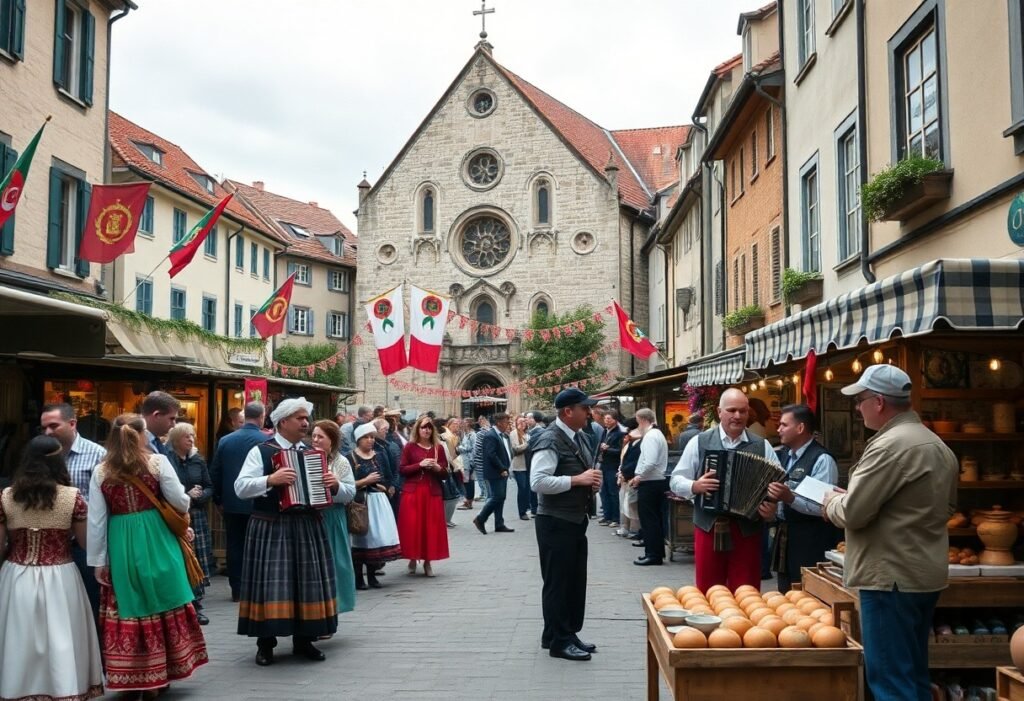
Over centuries you have seen how European festivals let you engage with local identity: they preserve endangered customs, showcase folk music and crafts, and create positive economic and social impacts; you must also be aware of firework and crowd safety concerns. By visiting events and reading guides like Five Inspiring European Heritage Days Traditions, you deepen your understanding of regional stories and sustain living traditions.
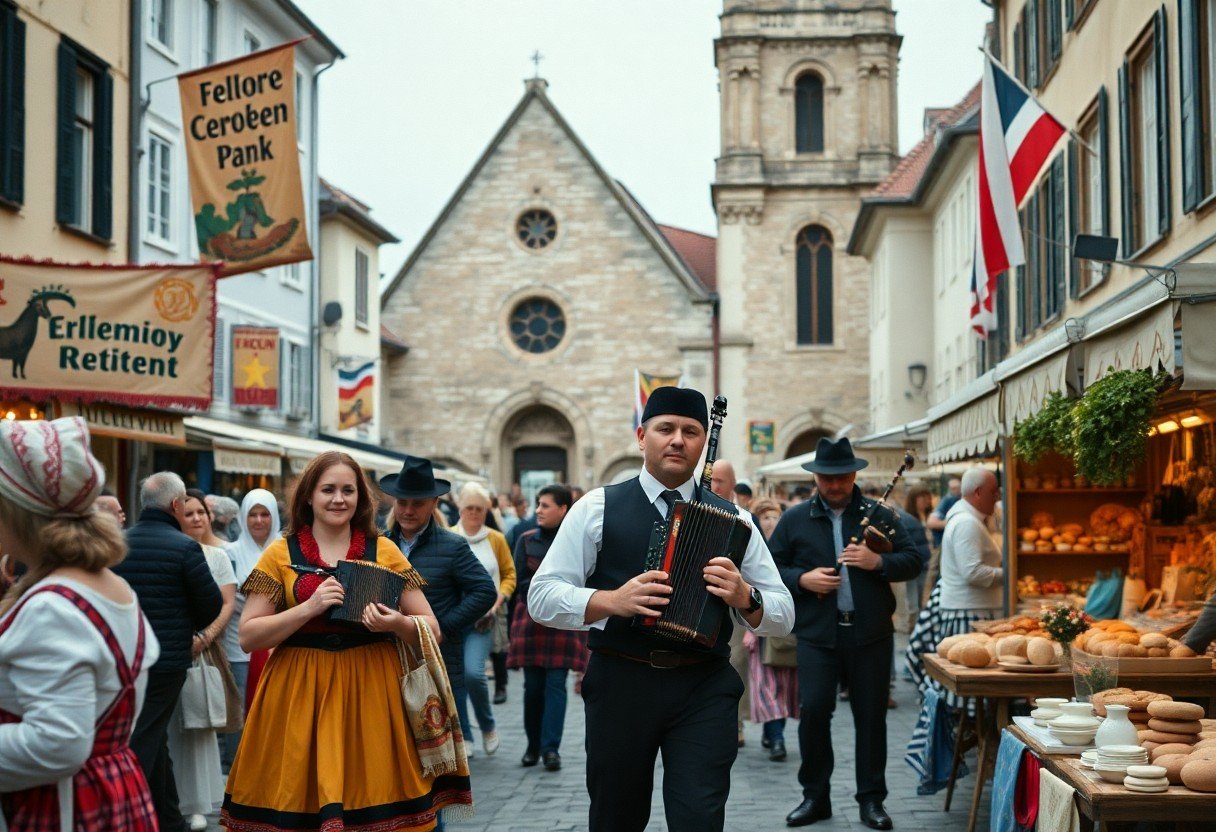
Key Takeaways:
- Festivals revive and showcase local traditions-music, dance, costumes, cuisine and crafts are performed and demonstrated to keep skills and stories alive for new generations.
- They reinforce community identity and economic resilience by bringing residents together, supporting artisans and small businesses, and attracting cultural tourism.
- Festivals adapt heritage for modern audiences through contemporary reinterpretations, collaborations with artists, and digital outreach, helping traditions stay relevant and accessible.
The Significance of Local Heritage in European Festivals
Across regions you witness how festivals act as living archives, from Spain’s La Tomatina to Scotland’s Up Helly Aa, and they often preserve local language, music and crafts. For concrete inspiration check the Best Community Cultural Festivals Around Europe. You should note that while many events boost tourism and identity, some-like fire processions or bull runs-carry significant safety risks that communities manage with strict protocols.
Historical Context
Tracing roots back centuries reveals patterns: Venice’s Carnival traces to 1162 and Oktoberfest began in 1810, so you can see how royal celebrations and guild rites evolved into public festivals. Archival records, municipal ordinances and preserved costumes show continuous adaptation, and you’ll notice revival movements-many towns revived rites in the 20th century to stimulate heritage tourism and cultural education.
Cultural Identity and Community Pride
When you attend events like Oktoberfest (around 6 million visitors annually) or the Edinburgh Festival Fringe (about 2.7 million attendees pre-pandemic), you witness how festivals broadcast regional identity to global audiences. Local choirs, dialects and costumes become visible markers of pride, and you’ll often see intergenerational participation anchoring communal belonging.
You’ll also find that festivals are sustained by long-term local effort: volunteer committees, family traditions and artisan guilds keep rituals alive, sometimes for over a century. In practice this means you can meet elders teaching dances, young people learning crafts, and neighborhood groups coordinating logistics-giving the event both economic lift and a tangible transfer of heritage knowledge.
Thematic Focus of Festivals
Themes steer programming across Europe: you see beer and folk culture at Oktoberfest (~6 million visitors), food-throwing spectacle at La Tomatina (~20,000 participants), and Fête de la Musique-born in 1982-lighting up streets in 120 countries. You note that themes determine scale, funding and infrastructure, creating economic benefits while also generating crowd-safety challenges that require detailed planning.
Agricultural Festivals
During September-October you can join vendemmia and harvest fairs where villages stage grape stomps, cheese markets and cider presses; many events draw thousands and offer farm-to-table tastings and producer stalls. You benefit from direct producer contact and seasonal products, though organizers must manage hazards such as heavy machinery on site and slippery surfaces during demonstrations.
Religious and Spiritual Celebrations
Religious festivals range from Seville’s Semana Santa-with over 60 brotherhoods parading ornate pasos amid dense crowds-to pilgrimages like the Camino de Santiago attracting hundreds of thousands annually. You encounter rituals tied to the liturgical calendar, processional music and sacred dress; event planners balance devotion with logistics for night processions, candles and large assemblies.
You also encounter syncretism: Austrian Krampus runs and Alpine Perchten parades merge pagan masks with saint-day timing, drawing thousands and necessitating police coordination, while the Oberammergau Passion Play, performed every ten years since 1634, shows how vow-made rituals evolve into major tourist draws. You should expect strict protocols, limited access and intense local stewardship to protect these practices.
Regional Variations in Celebrations
In different corners of Europe you witness sharply distinct local flavors: Scandinavia favors Midsummer bonfires and communal maypoles, the Baltics emphasize mass choral traditions, and the Mediterranean prefers processions, fireworks and street feasts; for ways to recreate these at home see 10 Ways to Celebrate European Festivals in the USA, while you plan around seasonal timing, etiquette and crowd-safety considerations.
Northern Europe
You encounter long-day rituals: Sweden and Finland mark Midsummer with maypoles, flower crowns and lakeside bonfires, while the Baltic Song and Dance Festival in Riga brings together about 30,000 singers every five years for massive choral performances; Norway’s Up Helly Aa stages torchlit Viking parades with hundreds of participants and thousands of spectators, so you should account for bonfires and torchlit processions that carry fire and crowd risks.
Southern Europe
You experience intense public devotion and spectacle: Spain’s Semana Santa fills streets with hooded confraternities and ornate pasos carried for hours, Italy’s Carnevale in Venice showcases elaborate masks and historical pageantry, and southern Mediterranean festas mix brass bands, stalls and nightly fireworks, giving you vibrant street processions alongside occasional fireworks and dense crowds that impact logistics.
For more specifics, Valencia’s Fallas involves over 700 falla monuments built and then burned during La Cremà, Seville’s Semana Santa features pasos borne by costaleros through packed plazas for hours, and Pamplona’s San Fermín runs the bulls through narrow streets each July-an event that draws tens of thousands daily and is dangerous, so you must follow local safety rules and timing to participate safely.
The Role of Traditional Crafts and Arts
Across regionally focused fairs you encounter artisans whose work anchors identity: Murano glassmakers relocated in 1291 still demonstrate furnace techniques, Meissen porcelain (founded 1710) appears in festival exhibits, and Portuguese azulejos date to the 15th century at tile demonstrations. When you handle a piece during a workshop, you see how festivals turn heritage into living practice; they sustain artisan incomes and offer apprenticeships, while also exposing a risk: declining apprentices and mass-produced imitations.
Handicrafts Preserving Heritage
At market stalls and hands-on booths you find bobbin lace in Bruges and Harris Tweed weaving in the Outer Hebrides; festivals often run short courses where you practice techniques alongside master makers. These events help sustain small workshops and let you trace design lineages across centuries, yet many traditions face a demographic squeeze as younger artisans migrate to cities.
Artistic Performances and Their Impact
Flamenco’s 2010 UNESCO listing and Venice Carnival mask parades show how performance cements identity; when you watch a local troupe you witness songs, dance steps, and stories passed through generations. Performances draw audiences-often providing a significant economic boost-while festivals give artists platforms to teach youth, though there’s a persistent risk of commercialization that can dilute meanings.
When you compare scales, the Edinburgh Festival Fringe-hosting over 3,000 shows and attracting millions of attendees-shows how performance demand spills into local markets; smaller events like Festival de Jerez concentrate audiences for flamenco, supporting costume makers and dance schools. Municipal surveys often report double-digit rises in craft commissions and class enrollments after festival seasons, indicating performances don’t just entertain but actively replenish the next generation of makers and performers.
Modern Adaptations of Heritage Celebrations
Today you notice heritage rituals being recalibrated for contemporary audiences: projection-mapped light shows on cathedral façades at Lyon’s Fête des Lumières, festival apps that schedule artisan demos for thousands, and live-streaming that lets diaspora communities join parades in real time. Organisers balance new revenue from sponsors with protection of rituals, and you often see municipal partnerships funding conservation work tied to events, turning ancient pageants into hybrid cultural-economic platforms.
Fusion of Tradition and Contemporary Trends
You encounter DJs sampling folk melodies, Balkan Beat Box-style acts on the same bill as traditional brass bands, and events like Fête de la Musique (launched 1982, now in ~120 countries) putting street folk ensembles next to indie stages. Festivals such as Sziget and La Mercè program collaborations where pipe bands, electronic producers and contemporary dancers share time slots, which revives audiences while igniting debates about authenticity dilution.
Sustainability and Environmental Awareness
You see major festivals adopting green targets: Glastonbury (~200,000 attendees) runs a “Leave No Trace” push, Boom Festival (≈30,000) treats wastewater onsite and funds reforestation, and many events ban single-use plastics. Organisers measure waste streams, install composting, and report progress publicly, driven by audience demand and rising regulation aimed at reducing festivals’ carbon footprints.
Digging deeper, you find transport often remains the largest emissions source-organisers estimate it can account for up to 60% of a festival’s footprint-so initiatives focus on discounted rail, shuttle services and secure bike parking. Several festivals partner with local suppliers to shorten supply chains, use renewable energy for stages, and publish annual sustainability reports; these steps both cut emissions and strengthen festival ties to the host community.
The Impact of Festivals on Local Economies
You see festivals convert culture into cashflow: they boost accommodation, hospitality and retail, create seasonal jobs and raise municipal tax receipts. Major events can inject millions into local economies; for example, Oktoberfest attracts over 6 million visitors annually and urban festivals like the Edinburgh Fringe draw over 2 million attendees, producing measurable spikes in overnight stays and service-sector earnings.
Tourism and Economic Growth
When you host a festival, tourism surges: hotel occupancy frequently exceeds 90% during peak days and ancillary spending on food, transport and experiences multiplies local revenue. Events such as La Tomatina (around 20,000 participants) and regional music festivals often lengthen visitor stays, prompting transport operators and tour guides to expand schedules and expect a significant uptick in bookings for weeks surrounding the event.
Community Engagement and Volunteerism
You depend on community involvement to keep costs down and authenticity high: many festivals recruit thousands of volunteers who provide vital staffing, stewarding and artist support, while local vendors and artisans capture a larger share of tourist spending. This grassroots workforce sustains operations and ensures cultural transmission without fully commercializing the event.
Volunteering also delivers lasting benefits for you and your community: participants gain event management skills, first-aid and crowd-control experience, and stronger local networks, with many festivals running formal training schemes and accreditation. In practice, major European events mobilize thousands of volunteer hours each season, reducing labor costs, expanding capacity for free programming and creating pathways for paid employment in tourism and cultural sectors.
Final Words
Upon reflecting on European festivals’ role in celebrating local heritage, you see how rituals, music, food and crafts anchor community identity and transmit knowledge across generations. Your attendance and support sustain artisan skills, local economies and living traditions, while thoughtful programming balances preservation with innovation. You gain deeper connection to place and people when festivals foreground local stories, landscapes and seasonal rhythms.
