
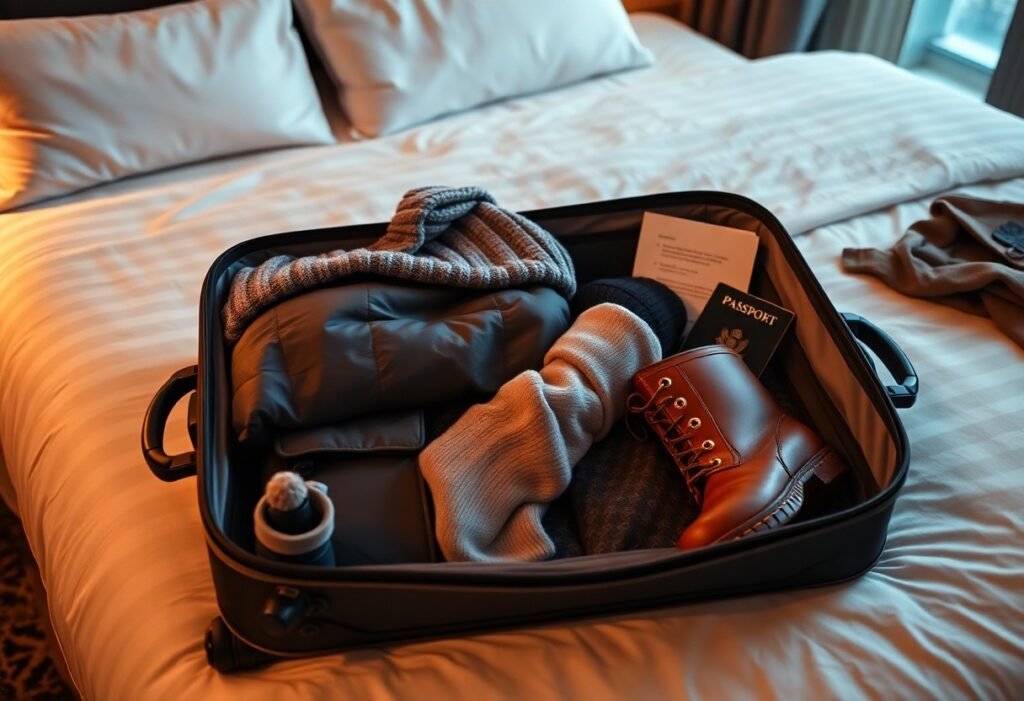
You should prioritize insulated layers, waterproof outerwear, and a compact emergency kit when packing for winter travel; keep electronics warm, label medications, and watch for hypothermia or icy hazards.
Key Takeaways:
- Layer clothing: pack a moisture-wicking base, insulating midlayer, and waterproof outer shell; include a compact down jacket and thermal socks to retain warmth without bulky bags.
- Organize luggage: use compression and waterproof packing cubes, place liquids and toiletries in carry-on, and keep a change of clothes plus vital medications easily accessible.
- Protect gear and plan for delays: store electronics in insulated pouches, carry a high-capacity power bank, and pack a small emergency kit (hand warmers, snacks, a compact first-aid kit) for unexpected winter disruptions.
Step-by-Step Guide to Efficient Winter Packing
Pack strategically: you should layer garments, tuck bulky coats around shoes, and keep valuables and electronics in carry-on pockets for quick access; use compression bags to save space and keep wet-weather gear sealed to avoid moisture spreading.
| Step | Action |
|---|---|
| 1. Sort | Group by use: daytime, evening, outdoor |
| 2. Protect | Wrap electronics and fragile items in layers |
| 3. Compress | Use vacuum or compression cubes for bulk items |
| 4. Access | Keep vitals and documents in an easy-access pocket |
Organizing Essentials Using a Categorized Checklist
Sort items into categories-clothing, toiletries, tech, and emergency-then tick a compact checklist so you pack only what you need and avoid duplicates; keep a printed copy in your bag for quick last-minute checks.
Systematic Loading Techniques for Maximum Efficiency
Load heavy items near the case base and fill gaps with rolled clothing so weight balances; place wet items in sealed bags and keep vitals in an accessible top compartment for fast retrieval.
Layer a base of rolled sweaters, position boots upright in plastic liners, then slot bulky coats along the perimeter to create a rigid shell. Use packing cubes to group outfits and a small pouch for chargers and passports; include a waterproof liner for damp gear. Seal liquids and carry batteries separately to reduce damage risk to electronics.
Conclusion
Presently you can pack smart for winter travel by prioritizing layered clothing, compact cold-weather vitals, and efficient toiletry organization; this saves space, reduces stress, and keeps you prepared for delays or weather changes.
