
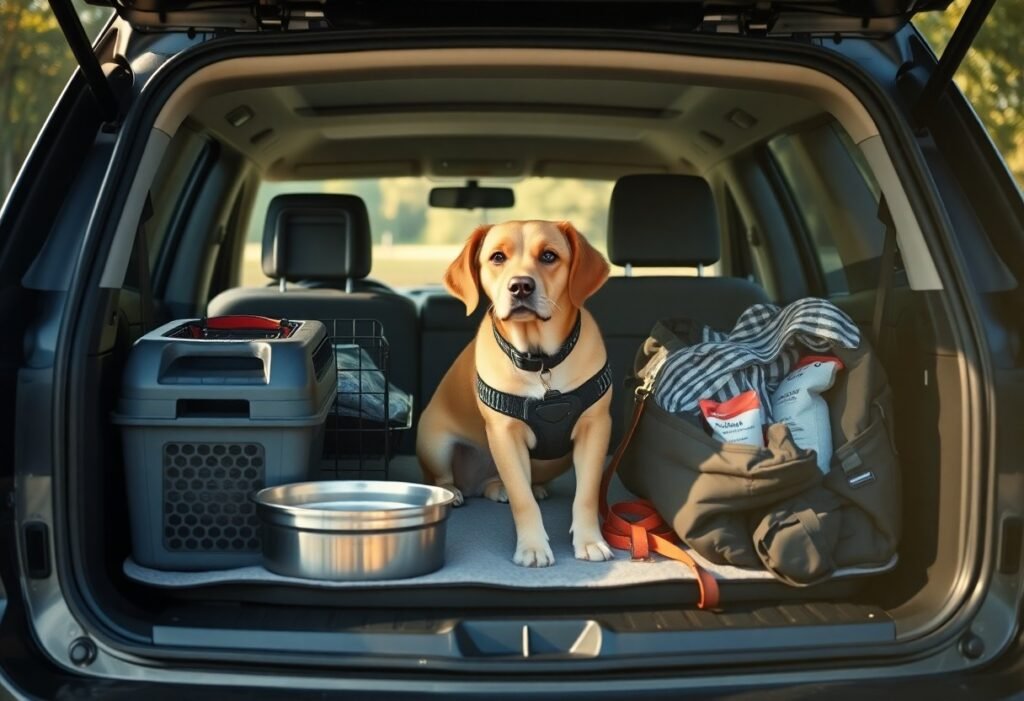
Checklist: Before you hit the road, assemble a compact kit so you and your dog stay safe and comfortable-include ID tags and microchip info, medications and veterinary records, a well-fitted harness and secure carrier, and a first-aid kit for injuries or heatstroke. Plan rest stops, pack familiar bedding and food to reduce anxiety, and have an emergency contact and route backup so your trip stays calm and enjoyable for both of you.
Key Takeaways:
- Pack importants: ID tags and microchip details, vaccination records, regular food and treats, medications, bowls, leash and harness, waste bags, and a familiar blanket or toy.
- Prioritize safety and comfort: use a secure crate or vehicle harness, maintain comfortable temperatures, offer frequent water breaks, and provide a soft resting spot for naps.
- Organize logistics: confirm pet-friendly lodging and transport, update emergency vet contacts, carry travel insurance or contingency plans, and do a short practice trip to test gear and routine.
Pre-Travel Preparations
Before you go, finalize paperwork, practice crate time and assemble a compact travel kit that covers food, water, first aid and a familiar blanket; schedule a vet visit 2-4 weeks ahead to sort certificates and meds, update your microchip and ID tag, and test any new gear. Use this checklist for packing specifics: The Ultimate Dog Packing List – What to Pack for Your Pet.
Health Checks and Veterinary Visits
Book a comprehensive exam 2-4 weeks before departure so your vet can clear your dog, update records and issue any required health certificates; airlines often demand a certificate issued within 10 days of travel. Ask about dental issues, weight management and parasite prevention, keep digital and paper copies of records, and avoid sedatives unless your vet explicitly approves them because they can cause respiratory or circulatory risk in flight.
Essential Vaccinations and Medications
Keep core vaccines current-especially rabies, which many destinations require-and get kennel cough (bordetella) if your dog will board or use pet relief areas; rabies vaccines are typically valid for 1-3 years depending on the product. Pack motion-sickness meds like maropitant (prescription) and antihistamines only under vet guidance, and bring at least a week’s extra supply in original bottles.
For international or multi-state travel, verify destination rules early: some countries require a rabies titer test or a waiting period after vaccination. Store meds in labeled containers, carry prescriptions and dosing instructions, and trial any new medication at home to monitor side effects; for chronic conditions, secure refills or a local vet contact and keep a pill organizer and a temperature-stable plan for refrigerated drugs.
Packing Essentials
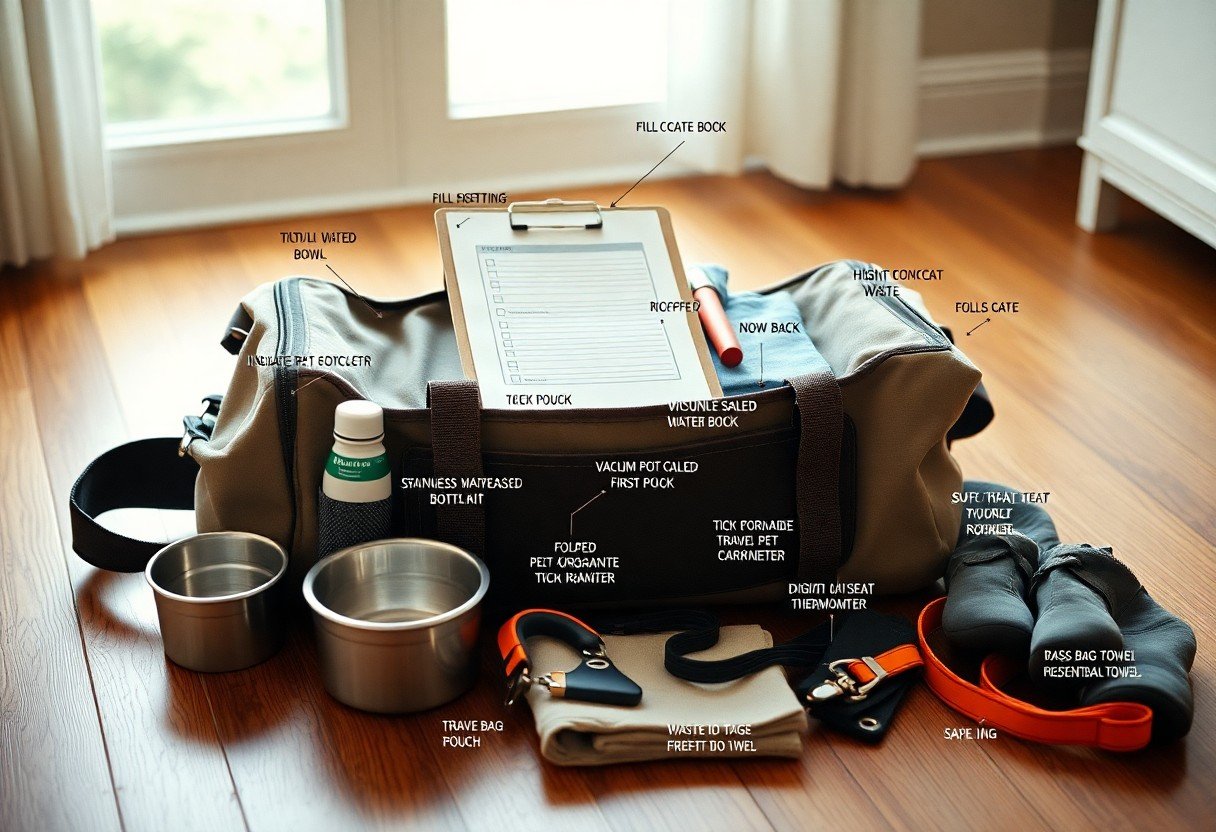
Keep a compact kit that includes paperwork, spare collars with ID tags, vaccination copies, your microchip number, daily meds, and a travel-sized first-aid kit for quick response; store everything in a waterproof pouch so you can access it fast. If you’d like a printable version, Download Your Ultimate Dog Travel Checklist.
Food and Water Supplies
Bring at least three days of your dog’s regular food in sealed containers and pre-measure daily portions to avoid overeating; pack familiar treats for stress relief. Carry about 1 ounce of water per pound per day and increase intake on hot or active days, plus a collapsible bowl and a 1L travel bottle with dispenser for hikes.
Travel Safety Gear
Choose a crash-tested harness or secured crate for car travel, a reflective vest for low-light walks, and a sturdy leash with a locking clip so you keep control. Pack a compact first-aid kit and a GPS tracker, and make sure your dog’s microchip details and emergency contacts are accessible. Before you go, check harness fit and swap batteries in electronics.
Include gauze, adhesive tape, antiseptic wipes, tweezers for tick removal, a digital thermometer, and small scissors in your kit; add styptic powder for bleeding and a narrow muzzle for panicked dogs. Store vet and emergency clinic phone numbers plus vaccination pages in a waterproof sleeve, and practice fitting the harness and crate at home so your dog stays calm and secure during trips.
Accommodation Considerations
When picking lodging, prioritize a fenced outdoor space and a veterinarian within 30 minutes for emergencies; those factors reduce stress and risk. Verify floor type and stair access if your dog has mobility issues, and scan recent reviews for reports of barking or pest problems. Opt for places with washable floors, on-site laundry, or nearby dog runs to simplify cleanup during multi-day stays.
Pet-Friendly Locations
Use filters on Airbnb, Booking.com, or dedicated sites to find listings that advertise pet amenities, and read reviews specifically about pets-mentions of a fully fenced yard, welcome treats, or local dog parks within 0.5-2 miles are big pluses. Note that many state and national parks limit dogs to campgrounds and roads, while urban stays near dog-friendly patios make evenings easier.
Booking and Policies
Always ask about size/weight limits, breed restrictions, and fees: typical pet fees range from $25-$75 per night or a refundable deposit; some properties also charge an extra cleaning fee. Confirm vaccination proof requirements and whether service animals are exempt from fees, and get any exceptions or rules in writing.
Before arrival, request the full pet policy emailed and photograph the room at check-in to avoid disputed damage claims. Ask for a ground-floor or end-unit near exits if you need quick bathroom breaks, verify rules for leaving your dog unattended (many places prohibit it), and confirm nearby emergency vets and leash laws so you’re prepared for incidents.
Transportation Tips
Plan transports around your dog’s needs: secure a crash-tested harness or an airline-approved carrier that lets your dog stand, turn, and lie down; schedule breaks every 2-3 hours for toileting and stretching; avoid leaving your dog in parked vehicles on warm days because temperatures rise fast; pack extra food, water, and familiar bedding to reduce stress. Assume that some destinations require a current health certificate issued within 10 days and specific vaccination windows.
- Car safety: use a harness or crate
- Carrier size: allow standing and turning
- Breaks: stop every 2-3 hours
- Heat risk: never leave unattended in vehicles
- Health docs: carry certificates and vaccine records
Car Travel Guidelines
Use a properly fitted, crash-rated harness or a sturdy, well-ventilated crate secured to the vehicle to prevent injury; feed light meals and avoid large meals within 3 hours of departure to reduce motion sickness; plan rest stops every 2-3 hours for 10-20 minutes of walking and bathroom time, and bring a non-spill bowl, 1-2 days of extra food, and a familiar blanket to keep your dog calm.
Air Travel Regulations
Check airline policies early: many carriers allow small dogs in cabin if total weight including carrier is under about 8 kg and the carrier fits under the seat, with fees typically $125-$200; for checked/cargo travel you must use an IATA-compliant crate, reserve space in advance, and present a recent health certificate-rules vary by airline and route, so confirm specifics before booking.
For international trips, verify country requirements at least 4-6 weeks ahead: many destinations require a rabies vaccination at least 30 days prior, some demand 3-6 months or quarantine, and microchipping is often mandatory; airlines and vets generally advise you not to sedate pets for flight-use acclimation, familiar bedding, and clear labeling on the crate to reduce stress and avoid travel delays.
On-the-Road Essentials
Stash a compact kit with ID tags, microchip docs, 2-3 days of food, a first-aid kit, collapsible bowls, waste bags, and a sturdy leash or harness; add a towel and a familiar blanket for comfort. If you’re traveling during holiday crowds, consult Holiday Travel Packing for Pets: Simple Tips for a Stress-Free Season for seasonal packing pointers, and always avoid leaving your dog unattended in a hot car-temperatures can soar fast.
Breaks and Exercise
Plan to stop every 2-3 hours for potty and leg-stretch breaks; give your dog a 10-20 minute walk to prevent stiffness and anxiety. Offer small sips of water and a brief play session-five minutes of fetch can burn excess energy-and check paws for road debris after long drives.
Comfort and Safety Items
Bring a well-fitted crate or crash-tested car seat, a seatbelt tether that clips to the harness (not the collar), non-slip mat, and two familiar toys; if your dog gets motion sick, pack vet-recommended meds or calming chews. Highlight the harness or crate as your main safety device and never secure a dog by collar alone in a moving vehicle.
Measure your dog from nose to tail base and add 2-4 inches so the crate allows standing, turning, and lying down; for height add 2-3 inches above the head. Secure the crate with a seatbelt or cargo straps, choose a breathable model for summer travel, and test the harness tether with a firm tug before departure; dogs over 40 lb often need heavy-duty restraints and extra padding for long trips.
Emergency Preparedness
Plan an evacuation route and identify at least two veterinary clinics within 50 miles of your travel route; heatstroke, foreign-body ingestion, and traumatic wounds are among the most common travel emergencies. Keep a printed vet list, local emergency clinic hours, and a map pin in your phone. In heavy heat, dogs can reach dangerous core temperatures in under 30 minutes; cool them with water and get to a clinic immediately.
First Aid Kit for Dogs
Pack gauze, self-adhesive bandages, sterile saline, antiseptic wipes, tweezers, a digital thermometer (normal canine temp 101-102.5°F), disposable gloves, styptic powder, and a 7-14 day supply of any prescription meds. Add a small muzzle, instant cold pack, and an emergency blanket. Replace expired items and store the kit where you can grab it in under 60 seconds.
Contact Information and Identification
Put your phone, secondary contact, and primary vet number on the collar tag, and register the microchip with current details; include your trip itinerary and destination address on a backup card. Program emergency numbers into your phone and keep a paper copy in the car. If your dog is lost, a registered microchip and visible tag dramatically increase the chance of a quick reunion.
Upload digital copies of vaccination records, microchip ID, and a recent photo to cloud storage and offline on your phone; set the photo as your lock screen for immediate ID. List local emergency clinics along your route, plus the Pet Poison Helpline (855-764-7661) and your vet’s after-hours number. Update the microchip registry within 24 hours of travel and include a secondary contact who can handle logistics if you’re delayed.
Conclusion
Ultimately, following this checklist helps you travel with your dog more smoothly and safely, letting you anticipate needs, manage health and comfort, and handle emergencies with confidence. By packing importants, verifying documentation, planning breaks, and conditioning your pet to new environments, you minimize stress and enjoy more relaxed, rewarding adventures together.
