
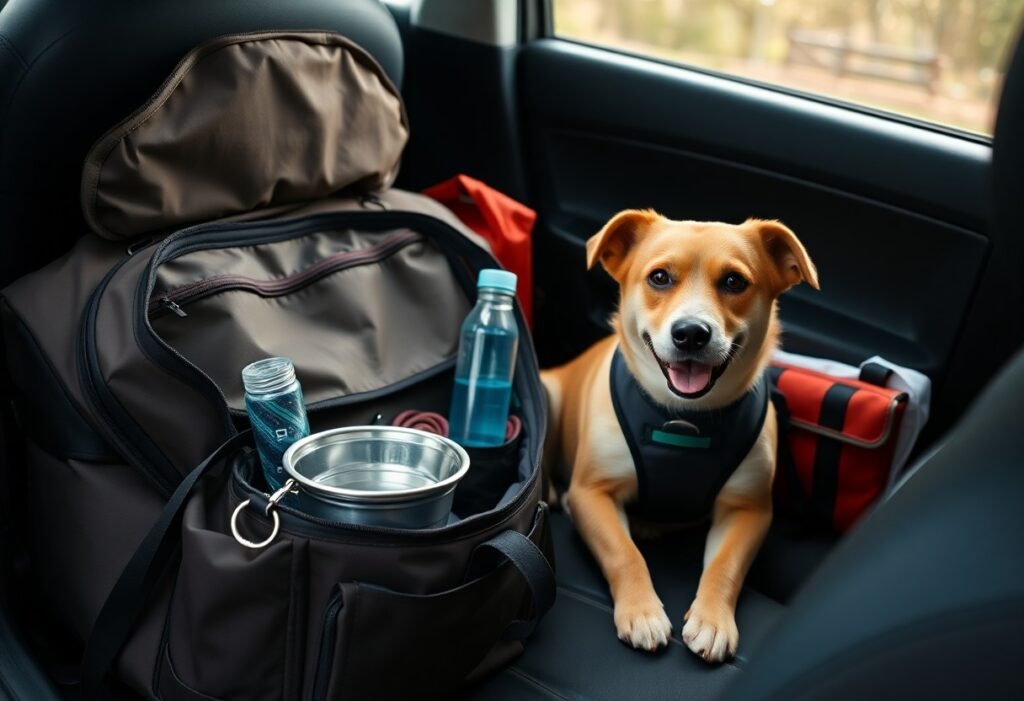
Most travel goes smoother when you prepare: pack a secure harness or crate, a first-aid kit, ample water and collapsible bowl to prevent heatstroke, updated ID and microchip, familiar bedding and calming treats, and any medications. Keep leashes and waste bags accessible and plan regular breaks so your dog stays safe and relaxed. See real-owner tips at Traveling, what are the crucials with a pup?
Key Takeaways:
- Secure containment and ID: use a travel crate, crash-tested carrier, or seat-belt harness plus a collar with up-to-date ID and microchip information.
- Food, water and comfort: pack portioned food, a collapsible bowl and bottled water, plus your dog’s bed/toy and any calming aids.
- Health and cleanup supplies: bring a pet first-aid kit and medications, vaccination records and vet contact, plus waste bags and wipes.
Essential Travel Gear
Pack items that meet safety rules and cut stress: an IATA-compliant crate for cargo or cabin, a crash-tested harness for car travel, collapsible bowls, a compact first-aid kit, and copies of vaccination records. Many airlines limit in-cabin pet + carrier to ~8 kg, so weigh your dog with the carrier beforehand. You’ll also want spare leashes, calming aids for anxious dogs, and a waterproof mat for unpredictable weather or long layovers.
Dog Crate or Carrier
Measure your dog from nose to tail base and shoulder height, then add ~10 cm length and 5 cm height to pick a crate that lets them stand, turn, and lie comfortably. Choose a hard-sided, ventilated crate for cargo and a well-ventilated soft carrier for cabin use when allowed; ensure secure latches, visible ID, and a sleeve for health certificates to avoid airline refusal or transport delays.
Travel Harness or Seatbelt
Use a crash-tested harness that anchors to your vehicle’s lower tether points or seatbelt system; the Center for Pet Safety’s crash tests are the best benchmark for performance. An unrestrained dog can become a dangerous projectile in a collision, so pick a harness with clear crash-test certification (for example, models that pass CPS testing) and follow manufacturer installation instructions exactly.
Fit and installation matter as much as certification: measure your dog’s girth at the widest ribcage and choose a vest-style harness that distributes forces across the chest and shoulders, not the neck. Perform a short test drive with your dog restrained, check for slippage, and replace the harness after any accident. Use locking carabiners or manufacturer-supplied anchors rather than improvised clips, and routinely inspect straps and hardware for wear.
Health and Safety Supplies
You should dedicate a section of your bag to health and safety items: a compact first-aid kit, spare leash and harness, emergency water and bowl, tick remover, and a pet life jacket if you’ll be on the water. Heatstroke and dehydration are common travel emergencies, so pack a digital thermometer and plan shade and cool-down options. Keep photocopies of vaccination records and the microchip number in a waterproof sleeve.
First Aid Kit
A well-stocked kit for travel includes sterile gauze, adhesive tape, self-adherent bandage, antiseptic wipes, tweezers, blunt scissors, disposable gloves, a digital thermometer, and a soft muzzle for injured animals. Add a tick remover and an electrolyte solution your vet approves. Use hydrogen peroxide 3% only under veterinary instruction and label everything clearly; keep the kit in an easily reachable, waterproof pouch.
Medications and Prescription Records
Carry all medications in their original, labeled containers and pack a printed copy of prescriptions, dosage instructions, and your vet’s phone number. Bring at least a 7-14 day extra supply and store meds that need refrigeration in a dedicated cooler in your carry-on. Keep a digital backup of records and the microchip ID accessible on your phone.
Check airline and destination rules for controlled substances and sedatives-some require declaration or paperwork. Obtain a vet-signed letter listing diagnoses, generic drug names, dosages, and treatment dates; many destinations also ask for a health certificate issued within about 10 days of travel. If a medication needs cold storage, use an insulated case with cold packs and a thermometer to monitor temperature during transit.
Comfort Items
Familiar Blanket or Bed
Bring a familiar blanket or bed to reduce travel anxiety and provide a consistent scent. Choose a machine-washable option sized to fit your crate or back seat-measure first (e.g., small dogs ~18″x12″, medium ~30″x20″). Select breathable, quick-dry fabrics like microfleece for humid trips and foam pads for long drives. If your dog chews, pick a reinforced bed or an old towel; unknown fabrics can trigger allergies and washed items help retain comforting home smells.
Favorite Toys
Pack 2-3 favorite toys: one durable chew (KONG Classic or Nylabone), one soft comfort toy, and an interactive puzzle for downtime. Rotate toys to keep interest high and bring one scented with home laundry to soothe nerves. For medium-large dogs, avoid toys smaller than 2 inches to reduce choking risk; keep toys in an accessible bag for quick calming during stops.
Choose a mix of textures and functions-chew toys for 10-20 minute calm sessions, plush for cuddling, and puzzles that dispense kibble to occupy 15-30 minutes. Clean toys after each trip with hot water and pet-safe detergent; replace items showing torn seams or small parts. In practice, a filled KONG during a two-hour drive often reduces whining and destructive behavior, while rawhide and brittle toys increase ingestion hazards.
Food and Water Necessities
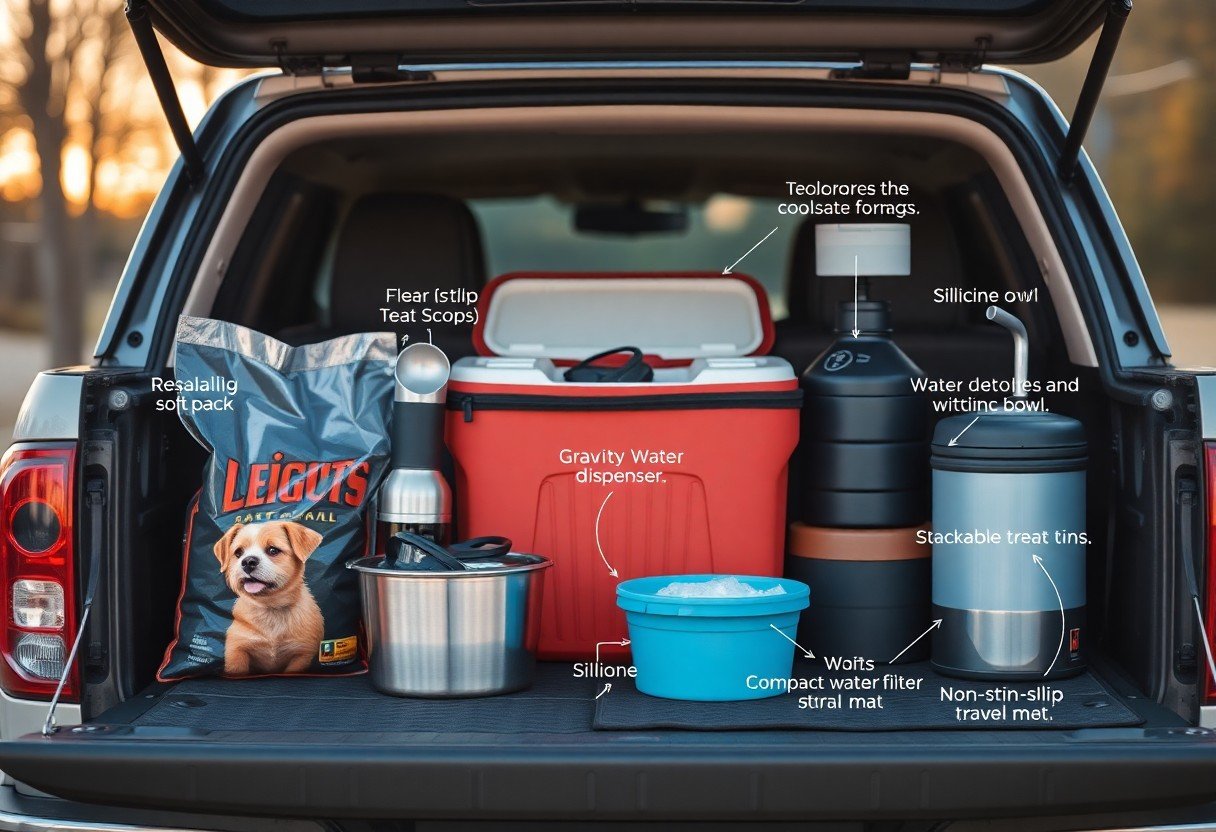
You should pack a collapsible bowl and a dedicated water bottle and plan for 30-50 ml/kg/day of water; offer sips every 2-3 hours on long drives and after activity. Bring electrolyte sachets and a small filter for remote stops. Keep food in airtight containers to avoid pests and spoilage, and note that dehydration is dangerous. See gear examples at Essentials for Travel with Dogs.
Portable Bowls
You’ll want a collapsible silicone bowl (300-600 ml) for walks and a stainless-steel bowl for camp meals; choose dishwasher-safe, BPA-free models. Opt for a bowl with a carabiner or strap so you can clip it to your pack, and carry a small sponge or sanitizing wipe to clean between uses. If you need hands-free options, a fold-out water dispenser with a leakproof valve works well on hikes. Portability and easy cleaning are the priorities.
Travel-Friendly Dog Food
Pick lightweight, shelf-stable options like freeze-dried or dehydrated diets and single-serve wet pouches for picky eaters; vacuum-sealed packs save space and extend shelf life. Measure portions with a scoop and pack servings by day to speed meal prep. For example, a moderately active 20 kg dog often needs about 300-400 g/day, adjusted for activity and age. Store dry food in airtight bins to prevent contamination.
When you use freeze-dried food, follow the manufacturer’s rehydration instructions-typically add about 2-3 parts water per 1 part food (e.g., 100 g food to 200-300 ml water) and let sit 5-10 minutes. Keep opened wet food chilled and discard leftovers left out over 2 hours in warm conditions (>25°C) to avoid bacterial growth. Also rotate samples before travel to confirm your dog tolerates the formula and note calorie density on labels to maintain weight.
Identification and Documentation
You should carry a consolidated file with your dog’s ID, health certificates, and proof of ownership because many carriers and border officials inspect paperwork before travel. Keep printed originals in a waterproof folder and digital copies in the cloud. For a practical checklist, consult Travel check list and packing list. Missing valid rabies or ownership papers can lead to fines, quarantine, or denied boarding.
ID Tags and Microchipping
Put a durable ID tag on your dog’s collar with your phone number, alternate contact, and city/country code for international trips. Microchip your dog with an ISO 11784/11785 15-digit chip and confirm registration in a national database-shelters and vets scan for ISO chips. If the chip isn’t ISO-compatible, bring a scanner or a vet’s letter noting chip type and number.
Up-to-Date Vaccination Records
Carry original vaccination certificates for rabies, DHPP (distemper/parvo), and bordetella; many hotels, kennels, and airlines require proof within set timeframes. Rabies vaccines typically need at least 21 days after the initial shot to meet some entry rules, and validity can range from 1-3 years depending on the vaccine. Keep paper copies and a clear photo on your phone for quick verification.
Schedule a vet visit 4-8 weeks before travel to complete boosters, obtain a signed health certificate, and confirm any destination-specific rules-some countries demand a rabies titer test or an import permit that adds weeks to your timeline. Airlines often require a health certificate issued within 10 days of travel, so verify each carrier’s policy. Save records in multiple places (phone, email, printed folder) and include your vet’s contact and microchip number; expired or missing rabies paperwork can result in quarantine or refusal of entry.
Navigation and Leisure
Plan your route and downtime: map pet-friendly stops, schedule your dog a rest every 1-2 hours, and scout shaded areas for midday breaks. Pack a collapsible bowl, portable shade and extra water-dogs can dehydrate after 30-45 minutes of vigorous activity in heat. Use local dog parks or quiet beaches as controlled play zones, and balance active hiking with calm sightseeing so you don’t overwork your dog.
Leash and Collar
Choose a 4-6 foot (1.2-1.8 m) leash for reliable control; you can switch to a hands-free waist leash for runs and a padded harness for pullers. Keep a flat collar with an engraved ID tag showing your phone and destination, and verify your microchip info before you leave. Avoid retractable leashes-they reduce control and can cause painful tendon or hand injuries if they snap or tangle.
Travel Apps and Maps
You can use Google Maps to find vets, BringFido or PetFriendly to locate dog-welcoming lodging, and AllTrails to filter hikes by dog access. Always download offline maps and GPX routes before you enter low-service areas, and favorite at least one 24/7 emergency clinic to cut search time during an incident.
When you map a longer route, pin veterinarians and emergency clinics within a 30-mile radius and note hours-rural areas often have the nearest 24/7 clinic 20-40 miles away. Export GPX tracks to your phone or smartwatch, save dog-friendly POIs, and carry a 10,000 mAh power bank to keep GPS running 8-12 hours; also store digital vaccination records in PetDesk or Pet First Aid for faster vet intake.
To wrap up
Now you can travel confidently by packing a secure harness or carrier, a leash, ID tags, microchip info, and vaccination records, collapsible food and water bowls, adequate food and treats, medication and a first-aid kit, waste bags, familiar bedding or blanket, and calming aids if needed; these items keep your dog safe, comfortable, and compliant with travel requirements.
