
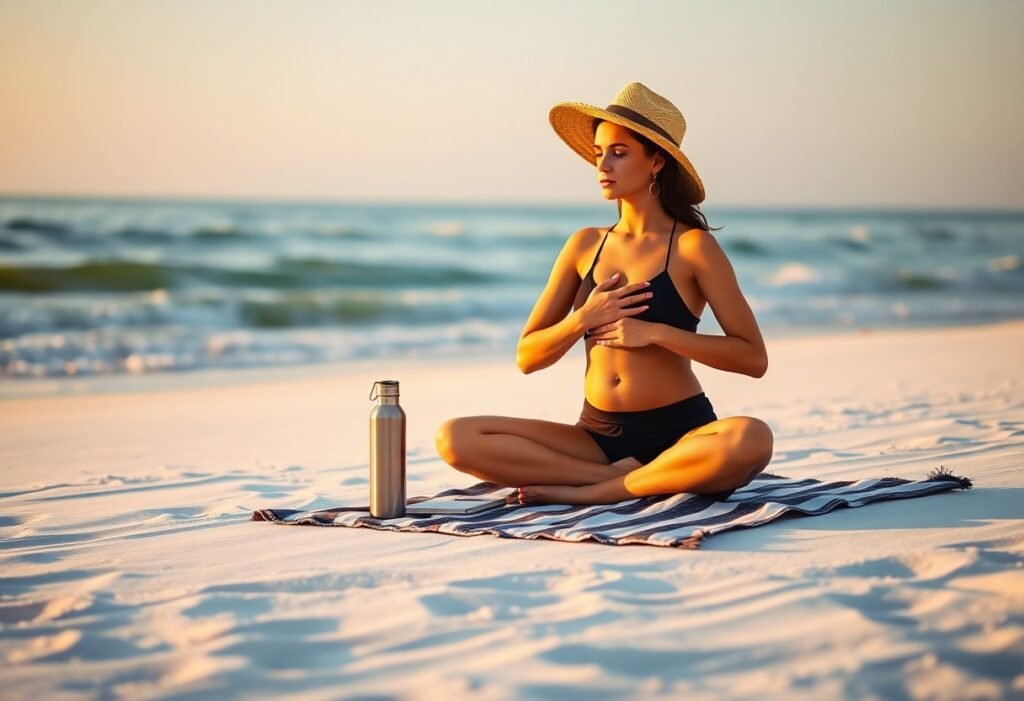
Many travelers go to the shore to unwind, and you can deepen that calm by practicing slow breathwork, mindful walking, and grounding with the gentle sound of waves; prioritize sun protection and awareness of rip currents to avoid danger, and carry a small kit to stay hydrated and shaded. Use guided body scans or simple meditation to anchor attention, and consult Top Tips for Relaxing on Tropical Beaches for practical setup and safety tips.

Key Takeaways:
- Use breathing synced with the waves – slow, deep inhales and longer exhales to lower stress and center attention.
- Anchor awareness in the senses – listen to surf, feel sand underfoot, notice scents and temperatures to stay present.
- Combine gentle movement and basic care – slow beach walks or stretches, limit screens, hydrate and seek shade to extend relaxation.
The Importance of Mindfulness at the Beach
When you settle on the sand, short intentional practices amplify the restorative effects of the coast: research on “blue space” shows coastal access is linked to higher well‑being, and even brief focused breathing by the shore can produce lower stress and clearer attention. While you soak in the scene, stay aware of hazards like strong sun and rip currents so safety doesn’t undermine the practice.
Benefits of Mindfulness for Travelers
You’ll find mindfulness reduces travel anxiety, improves sleep quality, and sharpens decision‑making during trips; studies of mindfulness interventions (including 8‑week MBSR programs) report measurable drops in perceived stress and anxiety. Integrating 10-20 minute seaside sessions can ease jet lag, help you engage with local culture, and make logistical choices with more clarity, giving you both practical and emotional returns on short practices.
How the Beach Enhances Mindfulness
The beach supplies natural anchors: the repeating wave sound, expansive horizon, and textured sensations underfoot make it easier for you to orient attention and sustain presence. Multiple epidemiological studies link coastal proximity to improved mental health, and sensory regularity at the shore helps reduce rumination, so you can use the environment as a built‑in cue for calmer, more focused awareness.
Try concrete techniques: inhale over two approaching waves and exhale across the retreat, do a 60‑second body scan from toes to head, or use a 3‑minute barefoot grounding to heighten interoception. If you practice for 5-15 minutes daily while traveling, you’ll notice steadier breath and clearer choices; keep sunscreen and a plan for rip currents nearby so your safety supports the practice.
Simple Breathing Techniques
Diaphragmatic Breathing
You can practice diaphragmatic breathing by placing one hand on your chest and one on your abdomen, inhaling through your nose so your belly rises while chest stays still, then exhaling slowly through pursed lips. Aim for about 5-7 breaths per minute (roughly six) and do 5-10 minute sessions to activate the vagal relaxation pathway and lower sympathetic arousal. If you feel lightheaded or tingling, pause and breathe normally and stop until sensations subside.
4-7-8 Breathing Method
Sit comfortably and practice the 4-7-8 pattern: inhale through your nose for 4 seconds, hold for 7, then exhale audibly through your mouth for 8 seconds. Repeat for four cycles to start, perform the set once or twice daily, and gradually build to eight cycles as tolerated to reduce acute anxiety and support sleep; many users report faster sleep onset after a few nights. If you feel faint or lightheaded, stop and return to normal breathing.
Extending exhalation stimulates your vagus nerve and shifts balance toward parasympathetic dominance; a single 19-second 4-7-8 cycle yields about 3 breaths per minute, far below the typical 12-20, which can lower heart rate. Begin with short sessions because prolonged holds may cause dizziness; if you have chronic lung or heart conditions, consult a clinician before practicing extended breath holds. Try syncing each cycle with an incoming or outgoing wave for added grounding and consistency.
Grounding and Sensory Awareness
Shift your focus to physical contact with the shore: pressing your feet into wet sand for 30-60 seconds anchors you in the present and stabilizes breathing. Short daily grounding sessions of 5-10 minutes can complement formal practice; clinical studies of 8-week mindfulness programs report stress reductions of roughly 20-30%. For practical tips, see How to Be Mindful at the Beach, and always watch for strong rip currents.
Connecting with the Sand and Water
Sink your toes 1-2 cm into damp sand, tense then release muscles for three cycles to feel ground contact; next let a single wave sweep your feet for 15-30 seconds to cool and reset skin temperature. On hot days sand surfaces can exceed 60°C (140°F), so test with your hand and use footwear as needed. Simple 2-5 minute routines-press, wiggle, breathe-help you trade scattered thoughts for immediate sensory data.
Engaging the Senses
Use the 5-4-3-2-1 method: name 5 things you see, 4 you can touch, 3 you hear, 2 you smell, 1 you taste; many beaches have wave periods of about 6-12 seconds, which you can use as a natural metronome. Close your eyes only when you’re balanced and a safe distance from surf, and note how each sense shifts your stress level within minutes.
Practice each sense for 30-60 seconds: with sight, scan for color contrasts or movement; with sound, isolate gull calls or breaking waves; with touch, compare dry sand, wet sand, and water temperature; with smell, distinguish salt, seaweed, or sunscreen; with taste, sip water to ground flavor. Clinical reports show acute anxiety can drop within minutes using these steps. Keep safety first-do not turn your back to the ocean while deeply focused.
Meditation Practices for the Beach
Structure your beach practice with breath, body scans, and timed sessions; start with a 5-10 minute breathing meditation-inhale for 4 counts, exhale for 6-to calm your nervous system. Then try a 10-20 minute body scan, ending with 1-2 minutes of open awareness where you let the waves set your rhythm. If you sit near water, check tide times and stay 10-20 meters from the waterline to avoid unexpected waves and protect your belongings.
Guided Visualization Techniques
Begin by choosing a stable spot and a 5-15 minute window for guided visualization; you can follow a three-stage script-1-2 minutes to ground with breath, 3-10 minutes immersing in detailed sensory imagery (sand texture, gull calls, salty air), then 1-2 minutes releasing tension. Use a clear landmark like a red lifeguard tower as an anchor. If you use headphones, keep volume low so you can hear waves and safety signals and avoid deep immersion while near water.
Mindful Walking on the Shore
Practice mindful walking by syncing breath with steps-inhale for three steps, exhale for three-over 10-30 minutes while scanning sensations in your feet. Choose compact, damp sand near the waterline for stability; walking on soft, dry sand can demand about 1.6 times more effort, so pace yourself. Keep your eyes forward occasionally to watch for changing surf and beware of rip currents; bring water and sun protection.
To deepen practice, alternate slow-focus intervals (4 minutes at half your normal pace) with brisk mindful strides (2 minutes) to notice contrasts in breath and tension. Set a measurable goal-walk to a marker 200 meters down the beach or use a 20-minute timer-to prevent wandering. If you have joint issues, shorten sessions to 5-10 minutes or stick to firmer sand, and avoid walking alone in poorly lifeguarded areas for safety.
Creating a Relaxation Routine
You can build a repeatable beach ritual by scheduling short, focused sessions: begin with 5-10 minutes of breath work, progress to 20-30 minutes of mixed meditation and sensory scanning, and aim for 3-5 sessions per week. Use a timer, note tide windows, and attach the practice to a cue like sunrise or a post-swim cool-down to make it habitual.
Setting Up a Beach Space
Select a spot that balances sound and safety: set up at least 6-10 m above the high-tide line, lay a low-profile mat or sand anchor for your umbrella, position a windbreak if winds exceed 15 km/h, and keep water, snacks, and SPF 30+ sunscreen within reach. Arrange items so you face the water for wave cues and have quick shade access.
Timing Your Relaxation
Prefer early mornings (06:00-08:30) or evenings (17:00-20:00) for calmer crowds and cooler temperatures; keep sessions to 5-20 minutes initially, longer if you have privacy. Check tide times so waves don’t encroach, and avoid peak UV hours (11:00-15:00) when possible.
Plan sessions around tides and your energy: use tide charts/apps (NOAA or local surf apps) to pick a safe window, then structure a 30-minute routine as 10 minutes breath work, 10 minutes body scan, and 10 minutes mindful walking or stretching. If pressed, try an 8-minute cycle: 2 minutes settling, 4 minutes paced breathing, 2 minutes sensory awareness. Always set a timer and hydrate before and after.
Incorporating Movement and Stretching
Begin with small, intentional movement to reawaken your body: try 5-10 minutes of gentle mobility walking along the shoreline, then progress to 3-5 minutes of joint circles for ankles, hips, and shoulders. Performing short sessions daily increases flexibility by measurable amounts-studies show 10-15 minutes of consistent stretching can improve range of motion by up to 20% over 4 weeks. Watch for sharp pain or dizziness and stop if it occurs; stay hydrated and shaded to avoid heat-related issues.
Gentle Yoga Poses for the Beach
You can sequence 3-5 accessible poses-like Child’s Pose, Cat-Cow, and Warrior II-to combine breath with movement; hold each for 5-10 breaths (about 30-60 seconds). Using sand for balance challenges forces stabilizing muscles to work harder, improving proprioception by an estimated 15-25% in novices. Modify with knees on a towel and avoid deep backbends if you have a history of spinal issues; prioritize steady breath and slow transitions to reduce strain.
Simple Stretching Techniques
Start with dynamic stretches-leg swings, arm circles, walking lunges-for 2-3 minutes to warm muscles, then move into static holds: hip flexor, hamstring, and chest stretches held for 20-30 seconds and repeated 2-3 times per side. You should aim for gentle tension, not pain, and breathe into each release; this approach reduces postural tightness and can lower perceived stress within a single 10-15 minute session.
For a quick routine, try 1 minute dynamic warm-up, then 3 static stretches: seated hamstring (hold 20-30s), standing quad (20-30s), and chest opener against your forearm (20-30s), completing the circuit twice. Adjust intensity based on age or injury-if you’re over 60 or recovering from injury, reduce holds to 10-15 seconds and consult a professional for persistent pain. Use the shoreline as a timing guide: inhale as waves approach, exhale with their retreat to maintain rhythm.
Final Words
With these considerations, you can reliably use simple beach relaxation techniques to deepen mindfulness, stabilize your breath, and attune your senses to the ocean’s rhythm. Prioritize short, consistent practices-grounding steps, gentle breathing, mindful walking-and adapt timing to your itinerary so your travel becomes restorative rather than draining. Your consistency and intentionality will make the beach a practical, portable sanctuary for sustained calm and clarity.
